
While medication may play a significant role in addiction treatment, recovery doesn’t necessarily involve eliminating withdrawal symptoms or cravings. Substance use can impact relationships, routines, mental health, work, and coping with stress. This is the reason counseling can be beneficial in tandem with Medication-Assisted Treatment (MAT).
When it comes to people looking for Medication-Assisted Treatment in Pompano Beach, medication and counseling can address different aspects of recovery. These can overcome various aspects of recovery. Medication can alleviate physical effects and cravings, and counseling can help the person understand patterns of behavior, learn coping skills, and establish a realistic plan for recovery.
What Is Medication-Assisted Treatment?
Medication-Assisted Treatment (MAT) is the use of FDA-approved medication in combination with counseling and behavioral therapy, as well as recovery supports, when appropriate. It is commonly used in opioid use disorder (OUD), and there are medications available for alcohol use disorder (AUD).
For OUD, the FDA has three drugs approved: methadone, buprenorphine, and naltrexone. Treatment can help ease withdrawal symptoms, lessen cravings, and/or block the effects of opioids depending on the medication and the person’s individual treatment needs. Medication selection and duration should be determined with a qualified healthcare provider.
Though stability can be achieved through medication, this does not address habits, trauma, mental health issues, or relationship issues that are related to substance use. Counselling is used to deal with those things.
Why Counseling Is Important During MAT
Addiction is rarely limited to physical dependence. Some behaviors, feelings, or coping strategies may have emerged over a period of months or years. Although the withdrawal symptoms subside and become easier to manage, there can still be triggers and stressful situations.
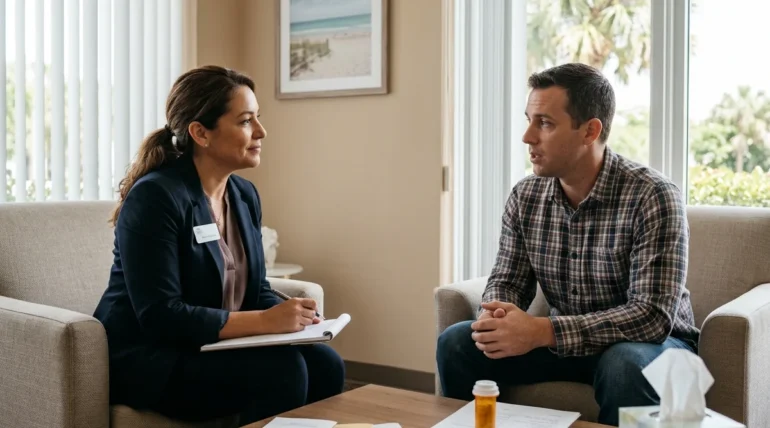
MAT counseling provides a structured place to work through these challenges. Addiction may be treated with individual or group therapy, each with its own specific focus and objective. Family therapy can also be used when a substance use problem has impacted communication and trust.
The extent and nature of counselling vary according to the person. It is essential that a treatment plan is designed in a proper way and not as a standard pattern.
How Medication and Behavioral Therapy Work Together
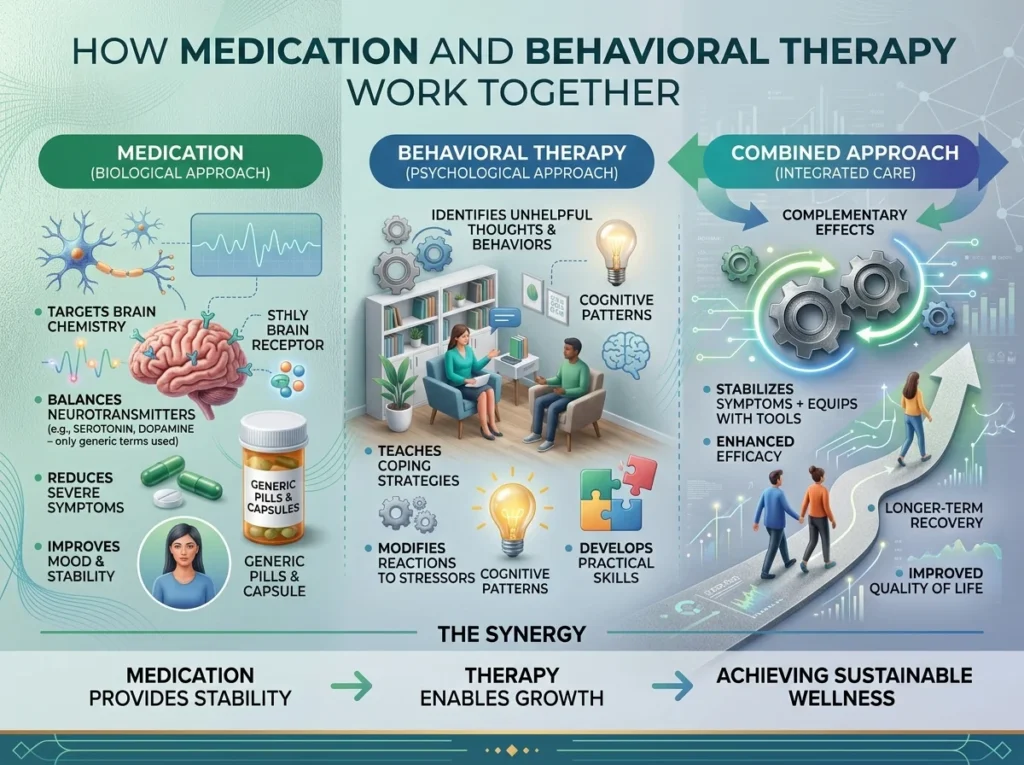
Medication and behavioral therapy can address different needs during recovery.
| Treatment Component | What It May Address |
| Medication management | Withdrawal symptoms, cravings, and treatment response |
| Individual counseling | Personal triggers, emotions, and coping strategies |
| Group therapy | Peer support and accountability |
| Family counseling | Communication and family relationships |
| Recovery planning | High-risk situations and practical next steps |
Some individuals may be more likely to attend counseling regularly if their physical symptoms and cravings can be better controlled. Then one can work on the emotional and behavioral aspects of recovery in therapy.
According to SAMHSA, drugs used to treat substance abuse disorders are considered one of the three key components of a comprehensive, patient-centered treatment plan that can also feature counseling and behavioral therapies, as well as medical or social support services.
Types of Counseling Used in Addiction Recovery
A range of evidence-based methods can be employed based on the person’s history, diagnosis and objectives, as well as mental health requirements.
Cognitive Behavioral Therapy (CBT)
CBT assists individuals in realizing that thoughts, emotions, and behaviors can impact one another. It can help someone to identify triggers and learn alternative, positive coping mechanisms in addiction treatment. For example, an individual who keeps relying on substances in response to stressful situations might come to understand the cue and learn to respond to it in a different way prior to the situation turning into a crisis.
Motivational Interviewing (MI)
With motivational interviewing, people consider their own motivations for change. The counselor helps the person to examine ambivalence, personal objectives, and consequences of continuing to use drugs, rather than confronting the person alone. This might be beneficial for someone who knows they are using substances and having problems, but may not know whether treatment or recovery might be right for them.
DBT and Trauma-Informed Care
Dialectical behavior therapy (DBT) has been found to be beneficial for some in the areas of emotional regulation, distress tolerance, and relationship skills. Trauma-informed care recognizes the effects of trauma on behaviour and treatment needs. Counseling can also be provided for issues related to anxiety, depression, or other co-occurring mental health needs as part of a coordinated behavioral health care plan.
Counseling Helps Build a Relapse Prevention Plan
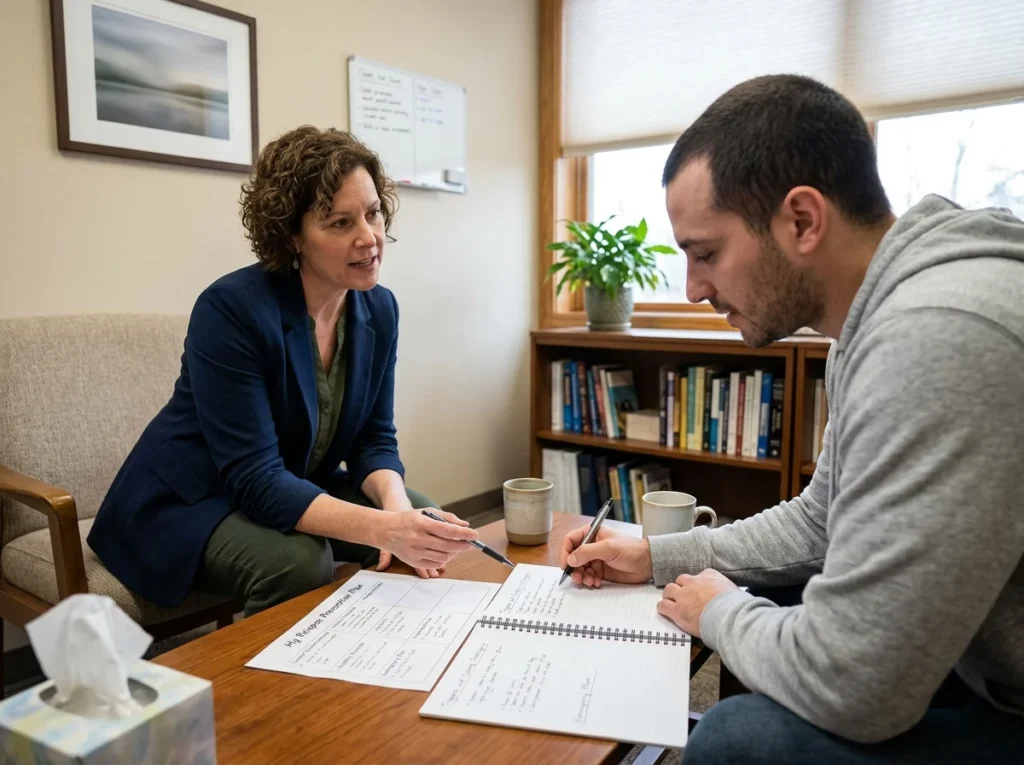
Recovery planning is not just about choosing to abstain from drugs and alcohol. A practical plan includes identifying circumstances that might lead to a risk and includes what a person will do if he or she feels a craving, stress or emotional issue.
Counseling can help a person identify:
- Personal triggers and high-risk environments
- Early warning signs that substance use may return
- Healthier ways to handle stress or conflict
- Supportive people to contact
- Steps to take after a setback
- Daily routines that support recovery
It’s important to remember that a relapse prevention plan doesn’t guarantee that a relapse won’t occur. But, with preparation, a person can react faster and get back to a healthy place of support instead of a longer period of substance use.
Addressing Mental Health and Addiction Together
A mental health condition can also occur along with a substance use disorder. A person may suffer from depression or anxiety or trauma or additional behavioral health problems as well as substance abuse.
It is here that mental health counseling may be able to be a great asset in the treatment strategy. The treatment information might involve addiction counseling, dual diagnosis treatment, psychiatric medication management, or a coordinated treatment plan with several professionals, based on the individual assessment.
If an individual is not able to treat key mental health concerns, this can make the process of recovery planning more difficult. However, treatment needs to remain individualized: There is no single “one size fits all” treatment for substance use disorders and no single “one size fits all” of services.
Common Misunderstandings About MAT
Many people think that giving someone methadone or buprenorphine is just “replacing” their addiction, which is not correct. These medicines are not considered evidence-based treatments when they are used in the right way and under the right conditions for OUD. Patients should talk with their provider before stopping treatment, and FDA-approved medications are known treatments.
Another misconception is that counseling alone is always a substitute for medication. Medications are a vital evidence-based treatment option for opioid use disorder. Additionally, national guidance points out that not having behavioral therapy does not automatically exclude an individual from receiving the proper medication therapy.
The goal is to match treatment to the individual’s needs rather than force everyone into the same recovery model.
What to Expect from Outpatient Addiction Treatment

Outpatient addiction treatment may be an option for some, enabling them to receive professional help while maintaining their work, family, and other responsibilities.
Typical first steps in treatment involve evaluating drug use, physical health, psychological issues, medications, and recovery objectives. A plan might consist of medical evaluation, medication management, individual counseling, group therapy, and/or referrals for other services, depending upon the person’s needs.
At Minds Over Matter, an individualized approach can help connect the medical and behavioral sides of treatment instead of treating addiction as a problem with only one solution.
When Additional Support May Be Needed
For some individuals, more intensive care may be needed if substance use is posing a serious safety risk, if they do not seem to be able to stay safe in outpatient care, they have frequent treatment rejections, or they have important medical issues.
Detoxification, residential treatment or intensive outpatient treatment might be recommended, depending on the evaluation. These decisions should be made by trained health care providers who are able to take into account the individual’s situation.
Frequently Asked Questions
Does MAT require counseling?
Counselling should be a part of complete drug rehabilitation, but the drug requirements may differ between drugs, providers, programs, and person requirements. A person’s right to the medication should not be denied when counseling is not available for OUD.
Can counseling help with opioid addiction?
Yes. Counselling can assist individuals to detect triggers, build coping strategies, discuss mental health issues and create a relapse strategy. It can be combined with medication treatment, if clinically indicated.
Can MAT be used for alcohol addiction?
There are medications for alcohol use disorders, such as acamprosate, disulfiram and naltrexone. A qualified provider can determine whether medication is appropriate as part of a broader treatment plan.
How long does MAT treatment last?
There is no single timeline. The length of treatment varies according to the medicine, the diagnosis, the treatment response and personal factors. Medications prescribed for OUD may be administered for months, years, and beyond, if they are used under a doctor’s supervision.
Final Thoughts
MAT can address important physical needs of recovery, and counselling can target behaviours, emotions, relationships and life situations, which may not be treatable through medication.
The best treatment plan for a Pompano Beach Addiction Treatment seeker could be medication, counseling, family support, mental health care or a combination of multiple treatment methods. Contact Minds Over Matter to explore treatment options and discuss a plan based on specific recovery needs.