

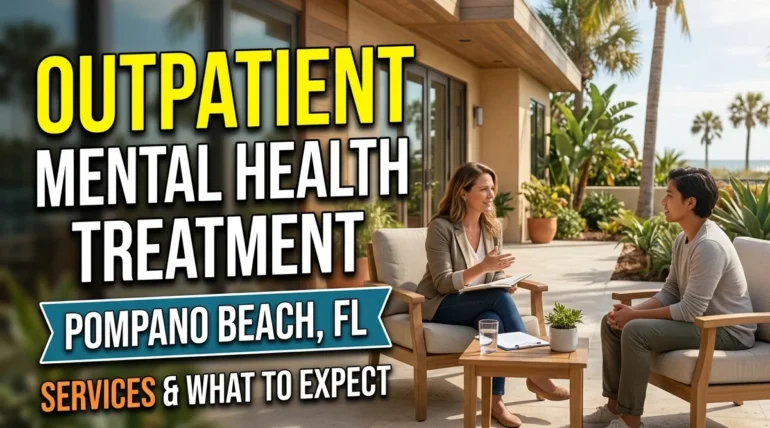
A mental health issue may impact your daily functioning, ability to sleep, communication skills, and work performance. With outpatient treatment, people in Pompano Beach can receive professional treatment without leaving their home or stopping their activities.
Outpatient Mental Health Treatment in Pompano Beach, FL, can include therapy, counseling, psychiatric care, medication management, and structured programs. This will vary based on symptoms, goals, level of functioning, and the assessment recommendation of the level of care.
What Is Outpatient Mental Health Treatment?
Outpatient treatment involves seeking mental health services by making appointments at home. With an inpatient facility, you do not live inside the facility 24/7. This type of outpatient mental health treatment can help those who require regular professional help but who are capable of dealing with the day-to-day aspects of living outside of treatment. nd the services that will be provided.
Common outpatient services include:
- Individual therapy for personal concerns and emotional challenges
- Outpatient counseling focused on coping skills and daily functioning
- Group therapy for guided support and shared experiences
- Assessment of mental health to gain insight into symptoms and treatment needs
- Treatment of psychiatric illness and psychotropic drugs as needed
- Family therapy and other supportive services as clinically indicated.
Another benefit of going to local treatment centers in Pompano Beach is that it will be easier to attend your treatment regularly, particularly if it requires continuous therapy sessions.
Services You May Receive in Outpatient Care
Outpatient treatment doesn’t refer to a single therapy or program. Services can vary depending on a person’s symptoms, diagnosis, treatment objectives, and response to treatment.
Individual Therapy
One-on-one therapy provides you with personal time to meet with a therapist and discuss issues that you may not be able to resolve on your own. Sessions may include emotional patterns, relationships, stress, trauma, and mental health patterns. Your therapist will also be able to teach you some strategies that you can use between appointments that will be helpful. Treatment goals may be revisited as your situation and needs evolve.
Group and Family Therapy
Group therapy helps people practice communication skills, discuss problems, and learn coping strategies while providing a safe and organized setting. Family therapy has a different focus in that it includes family members if there are connections between family relationships, communication, and the person’s mental health. It is critical to ongoing care to form a strong support system.
Psychiatric Care and Medication Management
Some may need psychiatric evaluation and management as part of their treatment. A psychiatrist or other qualified prescribing professional can review symptoms, medications, and treatment history before making recommendations. Not all people require medication. It can be used in conjunction with therapy and other mental health services when indicated.
Mental Health Conditions Outpatient Care Can Address

Outpatient treatment and counseling can help individuals with various behavioral health issues. Treatment should be determined by a professional assessment, not by symptoms.
Depression can impact mood, motivation, sleep, concentration, and interests in daily activities. Therapy may be helpful for patterns of thinking, actions, relationships, and coping.
Anxiety may be characterized by ongoing worry or fear, physical tension, or inability to relax. Outpatient treatment can assist people in identifying triggers and figuring out healthier means of handling anxious ideas and reactions.
PTSD includes intrusive memories, avoidance, increased alertness, and changes in mood after a traumatic event. Trauma-focused approaches could be considered if clinically appropriate.
People experiencing OCD may deal with unwanted recurring thoughts and repetitive behaviors. Attention, organization, impulse control, and functioning in daily life may be impaired by ADHD. Treatment should be prescribed on an individual basis based on the circumstances.
Who May Benefit From Outpatient Care?
An outpatient may be an appropriate choice for a person who requires ongoing mental health services but isn’t in need of constant attention.
It may be considered when a person:
- Can safely remain at home between appointments.
- Wants consistent therapy or counseling.
- Needs help developing practical coping skills.
- Can maintain some work, school, or family responsibilities.
- Needs psychiatric support without inpatient placement.
- Is transitioning from a higher level of care to ongoing outpatient support.
This is not to say that outpatient treatment is appropriate for all cases. When symptoms become severe or when an individual is unable to function safely outside of the treatment environment, a level of care that is higher in intensity may be recommended by the mental health professional.
How Treatment Usually Begins
When you’re not sure what to anticipate from your initial session, beginning treatment might seem a bit uncertain. The first step in a typical process is to listen to your concerns and decide on the services that might be suitable.
Initial Conversation
You can share what you are currently worried about, experiencing, being treated for, the timing you need, and the type of help you are seeking. This will help you determine if the provider’s services are a good fit for you.
Mental Health Assessment
A general evaluation of emotional and behavioral health. The symptoms, history, functioning in daily life, and treatment goals may be discussed by a professional.
Personalized Treatment Plan
The provider will then be able to suggest services that meet the needs. This may be group therapy, individual therapy, psychiatric services, medication management, and/or any mix of these services.
Progress Reviews
Treatment plans do not have to be long-term. Your provider can review progress and make changes when symptoms, goals, or circumstances change.
Outpatient Treatment in Pompano Beach: What Should You Look For?

It may be more convenient to attend mental health services near home. For individuals in Pompano Beach and the surrounding Broward County, it can assist you in comparing providers according to their services, professional credentials, method of treatment, schedule, and insurance coverage choices.
Avoid selecting a program because it is “outpatient. Two different providers can have the same term and provide vastly different services.
Before starting, consider asking:
- What types of therapy are available?
- Are psychiatric services offered?
- Is medication management available when appropriate?
- How often are appointments scheduled?
- Can family members participate when recommended?
- How is progress evaluated?
- What happens if symptoms require more intensive care?
- Which insurance plans or payment options are available?
These questions can provide you with a better idea of what treatment will actually entail and give you a chance to ask about available treatment options before choosing a program.
When a Higher Level of Care May Be Needed
Outpatient treatment works best for people who don’t need to stay at a facility to get help. Still, sometimes you need more structure or supervision.
An intensive outpatient program (IOP) gives you more sessions and a tighter schedule compared to typical outpatient therapy, but you still live at home. Partial hospitalization programs (PHPs) offer even more structure for behavioral health care.
Some situations call for inpatient or residential treatment, especially when someone needs constant supervision or can’t handle their symptoms safely outside a treatment setting. A qualified mental health professional should decide this, looking at symptoms, safety, how well someone’s functioning, and their treatment history.
Frequently Asked Questions
How often will I attend outpatient therapy?
There isn’t a single clear answer. Some people go weekly; others need more frequent sessions. Your provider figures out the best schedule by considering your symptoms, goals, progress, and the kind of outpatient program you’re in.
Can I continue working or attending school?
Often, yes. One big perk of outpatient care is going home after each session and keeping up with your regular responsibilities. However, the amount of treatment and appointment frequency can affect how easily it fits around your work or school schedule.
Can outpatient treatment include medication?
Yes, if psychiatric care is available and medication makes sense for you, a qualified professional will look over your symptoms and history to see if it’s helpful as part of your bigger treatment plan.
What happens if my symptoms get worse?
Your provider will take another look and decide if your current treatment still fits your needs. Sometimes you’ll need something more structured, like IOP, PHP, residential, or inpatient care.
Is family therapy available?
Family therapy may be offered if it fits your treatment plan. It helps tackle communication problems and relationship issues and shows your family how to support you through recovery.
Final Thoughts: Choosing Outpatient Mental Health Support in Pompano Beach
Outpatient treatment gives you structured mental health support while letting you stay connected to home, work, school, and family. Therapy, counseling, group support, psychiatric care, and medication management all play their own roles.
If you’re searching for care in Pompano Beach, aim for services that fit your needs right now and can adjust as you change. Minds Over Matter can help individuals explore available outpatient support and take the next step toward appropriate mental health care.