

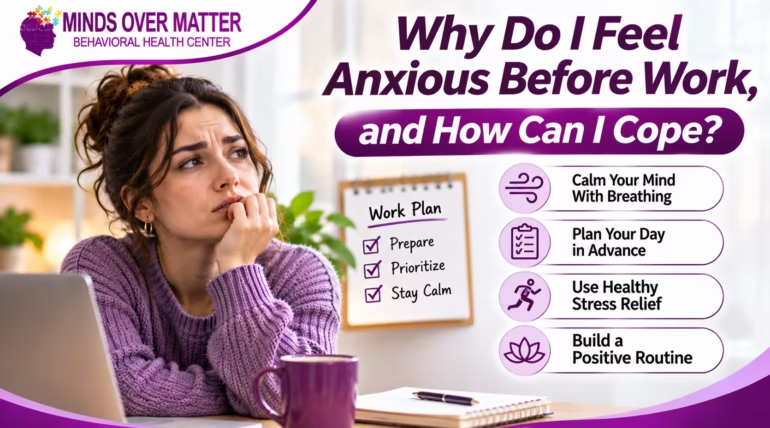
The alarm goes off, and your thoughts are already at the office. You remember an unfinished task, anticipate a difficult conversation, or picture everything that might go wrong. Before the workday begins, your stomach feels unsettled and getting ready seems harder than it should. That morning reaction can be exhausting.
Anxiety before work may be connected to a specific workplace problem, ongoing pressure, fear of being judged, or worries that follow you beyond your job. It can be difficult to separate a real concern from a feared possibility when you are already tense. Identifying the trigger helps you choose coping strategies that address the problem.
Why Anxiety Can Start Before You Reach Work
Anticipatory anxiety happens when the mind reacts to an event that has not happened yet. Thinking about a demanding meeting or a long task list can activate the body’s stress response before you leave home. Your body may react before the challenge begins.
Work-related triggers are not always obvious. Consider which of these situations feels familiar:
| Possible trigger | What may be running through your mind |
| Heavy workload | “I will never finish everything today.” |
| Fear of mistakes | “One error could make me look incapable.” |
| Workplace conflict | “I might have to deal with that person again.” |
| Unclear expectations | “I do not know what my manager wants.” |
| Job uncertainty | “What if my position is at risk?” |
| Burnout | “I do not have the strength to go through this all over again.” |
The APA identifies excessive workloads, limited control, unclear expectations, and weak workplace support as common job stressors. Anxiety may signal conditions that need to change, not a personal failure.
How Morning Work Anxiety Can Affect Your Body
Anxiety can show up physically as well as emotionally. You might notice a racing heartbeat, muscle tension, sweating, stomach discomfort, headaches, restlessness, or difficulty concentrating. Some people feel irritable or unusually alert; others want to avoid messages, delay getting dressed, or call in sick.
Notice whether the reaction settles once work begins or follows you into personal time. Stress often has an identifiable trigger, while anxiety can persist after the immediate situation passes. These symptoms may overlap, and experiencing them does not necessarily mean someone has an anxiety disorder.
Find the Pattern Instead of Guessing at the Cause
For one week, note when anxiety starts, what you are thinking, how your body feels, and what happens next. Focus on identifying patterns instead of criticizing yourself.
Try this simple trigger check:
- Before leaving home: Is the worry about commuting, being late, or entering the workplace?
- On arrival: Does seeing a particular person, place, or notification increase the tension?
- Before a task: Are you expecting criticism, failure, or an unrealistic deadline?
- After work: Does the worry continue even when you are away from the job?
For example, someone may feel fine on weekends but tense every Sunday evening. Their notes may show anxiety rising when they remember a Monday team meeting. The useful issue to address may be unclear responsibilities or fear of speaking up, not the entire morning routine.
A More Manageable Plan for the Morning
The goal is not to erase anxiety but to reduce decisions and make the next step manageable. If work-related stress is also making ordinary responsibilities difficult to start, our guide to managing overwhelming everyday tasks explains how to break larger responsibilities into smaller, more approachable actions.
The night before
- Choose clothes and prepare what you need to take.
- Note the first task you plan to complete the following morning.
- Choose a consistent wake-up time that fits your routine and make sleep a priority.
- Stop checking work messages outside your agreed work hours when possible.
When you wake up
- Push yourself into a sitting position and place your feet firmly on the floor. Pay attention to your breathing without trying to control it.
- Take a few slow, comfortable breaths, allowing the exhale to be unhurried.
- Eat something and drink water if that is part of your normal routine.
- Replace the whole-day worry with one manageable action: shower, get dressed, or prepare breakfast.
- Leave enough time to avoid turning the commute into another source of pressure.
If caffeine worsens jitters, consider reducing it. A short walk may also ease tension.
Respond to the Work Problem, Not Just the Feeling
Relaxation cannot fix an unreasonable workload, bullying, or shifting expectations. If a recurring stressor appears in your notes, consider what practical change could help.
| If the pattern involves… | A possible next step |
| Too many competing tasks | Ask your manager to confirm priorities and deadlines |
| Unclear responsibilities | Request written expectations or examples of completed work |
| Repeated conflict | Keep factual notes and seek appropriate workplace support |
| Fear of making mistakes | Break the task into checkpoints and ask questions early |
| Work spilling into home life | Set clearer limits around messages and availability |
You can request an adjustment without sharing private information about your circumstances. You might ask, “Which of these tasks should come first?” If direct discussion feels unsafe, consider a trusted supervisor, human resources, or an employee assistance program.
When It May Help to Speak With a Mental Health Professional
Consider professional support when anxiety is hard to control, disrupts sleep or relationships, leads you to avoid work, or affects daily functioning. For people who need regular mental health support while continuing their work and home responsibilities, outpatient treatment is an option worth discussing with a qualified professional. Reach out for support before you feel completely overwhelmed.
A mental health professional can explore whether workplace stress or an anxiety condition is contributing. Cognitive behavioral therapy (CBT) helps people recognize unhelpful thought patterns and practice different responses. A provider can discuss suitable treatment options.
For people in Pompano Beach, Minds Over Matter encourages anyone experiencing persistent work-related anxiety to seek support without treating it as a personal weakness. If anxiety feels overwhelming, a qualified professional can help you develop a plan suited to your circumstances.
Frequently Asked Questions
Is It Common to Experience Anxiety Before Heading to Work Each Day?
Work pressure can cause occasional anxiety, but daily distress deserves attention, especially when it affects sleep, health, or attendance.
Why Do I Feel Sick Before Heading to Work?
Stress and anxiety can affect digestion, muscles, sleep, and heart rate. A healthcare professional can assess persistent or unexplained physical symptoms.
Can work anxiety affect job performance?
Yes. Worry can make concentration, decision-making, communication, and task completion harder, particularly when anxiety continues throughout the day.
Can cognitive behavioral therapy help with work anxiety?
CBT can help identify unhelpful thinking patterns and build practical responses to anxiety. A mental health professional can determine whether it fits your needs.
Should I quit my job if I feel anxious every morning?
Not necessarily. First, consider the triggers, available workplace changes, financial circumstances, and professional support before making a major decision.
Final Thoughts: Take the First Step Toward Calmer Workdays
Feeling anxious before work does not mean you are weak. It may signal that workload, expectations, or your well-being need attention. Notice the pattern, choose one coping step, and seek support if anxiety affects daily life.
Minds Over Matter reminds readers that support can help make persistent anxiety easier to understand and manage. You deserve a work routine that does not begin with dread, and you do not have to figure out the next step alone. If you would like to discuss available mental health support, you can contact the team for more information.