

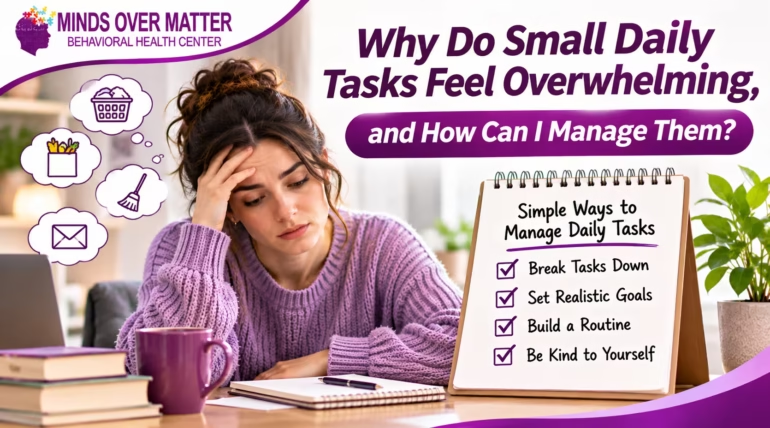
You may have a few ordinary things to do: answer an email, wash the dishes, return a call, or put away laundry. None seems especially difficult on its own. Yet you sit down, look at the list, and feel stuck before starting. Even choosing what to do first may seem like more than you can handle.
This experience is not automatically a sign of laziness or poor discipline. Stress, emotional exhaustion, attention difficulties, and changes in mental health can affect how the brain organizes information and begins tasks. Understanding what is making everyday responsibilities feel heavier can help you choose a realistic way forward.
Why Ordinary Responsibilities Can Feel So Heavy
A simple task often involves hidden steps. Paying a bill means finding the statement, checking the amount, logging in, and choosing an account. When several responsibilities compete for attention, the brain must organize many details at once.
This is cognitive overload. Working memory has limits, and stress can make concentration, decision-making, and planning harder. Work pressure, family responsibilities, financial concerns, and poor sleep can leave less mental energy for routine activities.
What Might Be Behind the Feeling?
There is rarely one explanation that fits everyone. The cause may change with sleep, health, daily demands, and available support.
| Possible factor | How it may affect everyday tasks |
| Chronic stress | Keeps attention focused on worries and competing demands |
| Anxiety | Makes ordinary decisions feel risky or creates fear of getting things wrong |
| Depression | May reduce energy, motivation, concentration, and interest |
| Mental fatigue | Makes planning, remembering steps, and switching between tasks harder |
| Executive function difficulties | Can affect task initiation, prioritizing, organization, and follow-through |
| Poor sleep or physical strain | Leaves fewer resources for attention and problem-solving |
Executive functioning includes the mental skills used to plan, organize, control attention, remember instructions, and move between steps. When these skills are under pressure, you may know what needs doing but struggle to begin.
Feeling overwhelmed does not automatically mean you have ADHD, anxiety, or depression. A professional can assess how long the difficulty has lasted and how it affects daily life.
Why Avoiding a Task Can Make It Feel Bigger
Putting something off may bring short-term relief, but the unfinished task stays in the background. You may keep remembering it and feeling guilty, so it takes up mental space even when you are doing something else.
Decision fatigue adds another barrier. After a day of choices and interruptions, deciding where to start may feel like another job. Perfectionism can also make starting harder if you believe everything must be done perfectly.
A Practical Way to Restart When You Feel Stuck
Do not force yourself through the entire list. Reduce the effort required to take one useful step.
- Choose one task, not the whole list. Write down the task that would make the biggest difference. Set the others aside temporarily.
- Name the first physical action. Replace “clean the kitchen” with “put the cups beside the sink.” Replace “deal with bills” with “open the latest statement.” A visible action is easier to approach than a broad instruction.
- Make the starting point smaller. Work for five minutes, open the document, or gather the items you need. Reassess afterward; the immediate goal is to begin.
- Reduce unnecessary decisions. Prepare a short list, keep supplies in one place, or set a regular time for routine tasks.
- Match the task to your energy. Handle a familiar, low-effort task first when concentration is low. Save complicated decisions for when you feel more alert.
- Recognize what you completed. Record small wins instead of judging the day only by unfinished tasks.
These strategies reflect behavioral activation: taking manageable action instead of waiting for motivation. Deep breaths, a brief walk, fewer notifications, or a break from social media may also help you refocus.
When Should You Seek Mental Health Support?
Speak with a healthcare provider or mental health professional if difficulty managing responsibilities persists, worsens, or affects work, relationships, or personal care. Seek support if it comes with ongoing anxiety, low mood, loss of interest, sleep changes, or emotional exhaustion.
The National Institute of Mental Health advises seeking help for severe or distressing symptoms, including difficulty concentrating or completing usual activities. Do not wait if symptoms are intense or safety is a concern. Support may include cognitive behavioral therapy (CBT), coping strategies, or ongoing care through outpatient treatment when recommended after a professional assessment.
In Pompano Beach, you can begin with a primary care provider or licensed behavioral health professional. Minds Over Matter helps people explore support options and practical next steps. A checklist alone may not address persistent symptoms.
Frequently Asked Questions
Why do I get overwhelmed by the simplest things?
Stress, fatigue, anxiety, low mood, and competing demands can make familiar tasks require more effort, especially when your mental resources are already stretched.
Can anxiety make everyday tasks harder?
Anxiety can cause worry, tension, sleep problems, and poor concentration. Ordinary decisions may feel threatening when you fear making mistakes.
Is task paralysis the same as procrastination?
Not necessarily. Procrastination generally involves delaying a task, while task paralysis describes feeling unable to start or choose a next step. They can overlap, but persistent difficulty initiating tasks may have several underlying causes.
Can counseling help with feeling overwhelmed?
Counseling may help you understand stress patterns, build coping skills, and manage responsibilities. A professional can also assess whether additional treatment may help.
What should I do when everything feels overwhelming?
Choose one small action that takes a few minutes. Write down the next step, reduce distractions, and ask someone you trust for support. If the feeling persists, consider professional guidance.
Final Thoughts: Make the Next Step Manageable
When small tasks feel overwhelming, your mental or physical resources may be stretched, not failing. Identify what is making responsibilities harder and shrink the next action until it feels possible. If the difficulty continues to disrupt daily life, seek support rather than managing everything alone. Minds Over Matter can help you take a thoughtful next step toward appropriate support.