
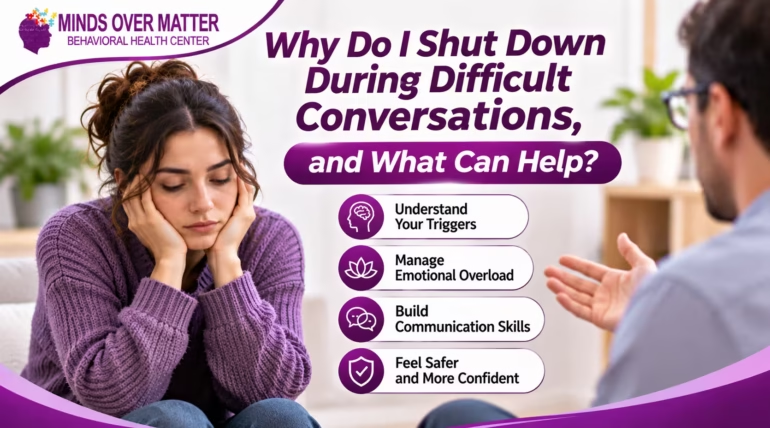
You may enter a difficult conversation intending to explain your feelings, only to find yourself unable to speak when tension rises. Your mind goes blank, your body feels tense, or you suddenly want to leave. This experience is often described as emotional shutdown, and it can make even simple disagreements feel overwhelming.
Shutting down during arguments does not automatically mean you do not care about the other person. It may be your response to stress, fear of criticism, past experiences, or emotional overload. Understanding what triggers this reaction can help you communicate more clearly and build healthier relationships.
What Happens When You Shut Down During an Argument?
Emotional shutdown during conflict happens when intense feelings make it difficult to think, speak, listen, or respond. Instead of expressing what is bothering you, you may become quiet, withdraw, or struggle to find the right words.
Common signs include:
- Going silent even when you have something important to say.
- Feeling mentally blank or disconnected from the conversation.
- Avoiding eye contact or struggling to follow what someone says.
- Feeling tense, overwhelmed, numb, or suddenly exhausted.
- Agreeing with someone just to end the disagreement.
This response can create a communication breakdown. One person may interpret silence as indifference, while the person shutting down may feel misunderstood or unable to explain what is happening.
Why Do I Shut Down When Someone Argues With Me?
There is no single reason people withdraw during difficult conversations. Several emotional and psychological factors may contribute.
Emotional flooding: When anger, fear, sadness, or frustration becomes intense, your ability to process information may temporarily become less effective. You might know what you want to say but struggle to organize your thoughts.
Fear of criticism or rejection: If disagreement feels like a threat to your relationship or self-worth, staying quiet may seem safer than expressing an opinion.
Past experiences: Growing up around frequent arguments, harsh criticism, or unpredictable reactions may influence how you respond to conflict as an adult.
Conflict avoidance behavior: Some people learn to avoid disagreements because they expect arguments to escalate. Silence may become a familiar way to prevent tension, even when it does not resolve the problem.
The American Psychological Association describes stress as a response that affects how people feel and behave. During conflict, that stress response may contribute to withdrawal, defensive behavior, or difficulty communicating.
How to Communicate When You Feel Overwhelmed
You do not have to force yourself to finish every difficult conversation immediately. Small changes can help you stay connected without ignoring your emotional limits.
Try these approaches:
- Recognize your early signs: Notice when your breathing changes, your thoughts become scattered, or you feel an urge to withdraw.
- Name the emotion: Try identifying whether you feel embarrassed, anxious, hurt, angry, or afraid. Naming the feeling gives you a starting point.
- Ask for a planned pause: Say, “I want to talk about this, but I need a little time to collect my thoughts.”
- Set a return time: Agree to continue the conversation after 20 or 30 minutes, if that feels manageable. Avoid using a break to escape the discussion indefinitely.
- Use simple statements: You do not need a perfect explanation. Start with, “I feel overwhelmed,” or “I am having trouble explaining what I mean.”
- Listen and clarify: Repeat what you understood and ask questions instead of assuming the other person’s intentions.
These habits support emotional regulation and assertive communication. The goal is not to eliminate every uncomfortable feeling, but to respond without letting stress control the entire interaction. If speaking up becomes especially difficult when you need to refuse a request or set a boundary, our guide to overcoming guilt when saying no offers practical ways to communicate your limits without giving in to pressure.
Can Therapy Help With Emotional Shutdown?
Yes. Individual psychotherapy can help you understand why difficult conversations trigger emotional withdrawal and develop more effective ways to respond.
Depending on your needs, a therapist may use approaches such as:
- Cognitive Behavioral Therapy (CBT): Helps identify thought patterns that contribute to fear, avoidance, and defensive reactions.
- Dialectical Behavior Therapy (DBT) skills: Teaches emotional regulation, distress tolerance, mindfulness, and interpersonal effectiveness.
- Assertiveness training: Helps you express needs, boundaries, and disagreements respectfully.
Therapy also offers a space to explore emotional triggers without the pressure of an active argument. You can practice communicating feelings, recognizing stress signals, and handling disagreements at a manageable pace.
For local context, the Florida Department of Health reported 1,560 actively licensed mental health counselors in Broward County in 2024. This county-level count does not indicate how many specialize in conflict-related concerns, so check a provider’s qualifications and approach before scheduling.
Minds Over Matter provides an opportunity to explore emotional and communication concerns with professional support. A conversation with a qualified therapist can help you identify patterns and decide what kind of support fits your needs.
Frequently Asked Questions
Is shutting down during arguments a stress response?
It can be. Intense emotions may activate your stress response and make speaking or processing information more difficult. However, emotional shutdown can have different causes, so consider the situations and feelings that tend to trigger it.
Why can I not speak during emotional conversations?
You may feel emotionally flooded, anxious, or afraid of saying something that makes the situation worse. Your thoughts may become difficult to organize when tension rises. Taking a planned pause and using short statements can help you begin communicating again.
How do I stop shutting down emotionally?
Start by identifying your triggers and noticing early signs of overwhelm. Practice naming emotions, requesting breaks with a clear return time, and expressing one thought at a time. Consistent practice can make difficult conversations easier to manage.
Is emotional withdrawal the same as conflict avoidance?
Not necessarily. Emotional withdrawal may happen involuntarily when someone feels overwhelmed. Conflict avoidance is a broader pattern of avoiding disagreements or uncomfortable discussions. Both can affect relationships, but they may require different strategies.
When should I consider therapy for emotional shutdown?
Consider professional support if shutting down repeatedly affects your relationships, prevents you from expressing important needs, or causes ongoing distress. A therapist can help you understand the pattern and develop communication and emotional regulation skills.
Final Thoughts: Learning to Stay Present During Conflict
Shutting down during arguments does not mean you are incapable of healthy communication. It may signal that certain conversations feel emotionally overwhelming. With practice, support, and better awareness of your triggers, you can learn to express yourself without feeling pressured to respond perfectly. Minds Over Matter can help you explore these patterns and work toward healthier communication. If you would like to discuss professional support, you can contact the team to learn about available services.