
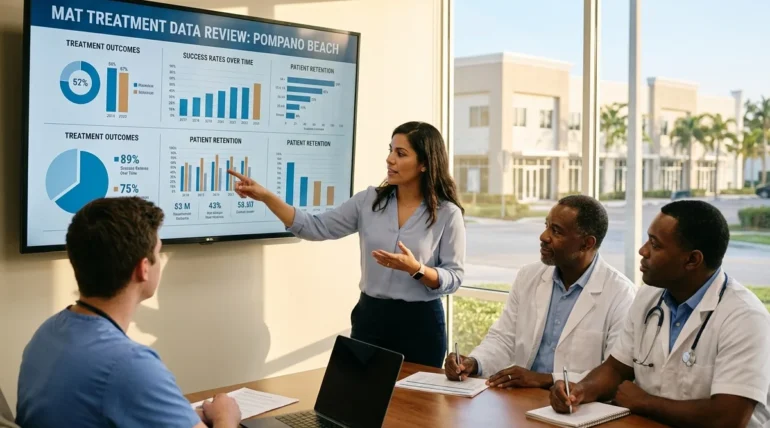
The honest answer is that there is no one correct percentage for this question: How successful is Medication-Assisted Treatment? There are different factors that can influence recovery results, such as the substance or medication that was used, the frequency of treatment, counseling, and how success is measured.
The question is particularly relevant for individuals in Pompano Beach, as the results are relevant to the outcomes within Broward County and Florida’s ongoing overdose burden. This guide explains what current evidence can measure, what the latest available local numbers show, and why long-term recovery cannot be reduced to one headline statistic.
How Should MAT Success Be Measured?
Medication-Assisted Treatment (MAT) is the practice of using a medication approved by the Food and Drug Administration in conjunction with counseling and other recovery support, as clinically appropriate. Opioid use disorder medications include methadone, buprenorphine, and naltrexone. For alcohol use disorder, medication-based treatment options may also be available.
A meaningful outcome is more than just one time being completely abstinent. Treatment providers might consider:
- Staying engaged in treatment
- Reduced substance use
- Fewer withdrawal symptoms and cravings
- Lower overdose risk
- Improved daily functioning
- Progress toward individual recovery milestones
That’s why it is important to take a closer look at a program that claims to have one universal “MAT success rate.” Maintaining a lower risk of overdose and enhancing retention in treatment are essential outcomes, and neither is a definitive guarantee of treatment success.
What the Latest Evidence Says About MAT Effectiveness
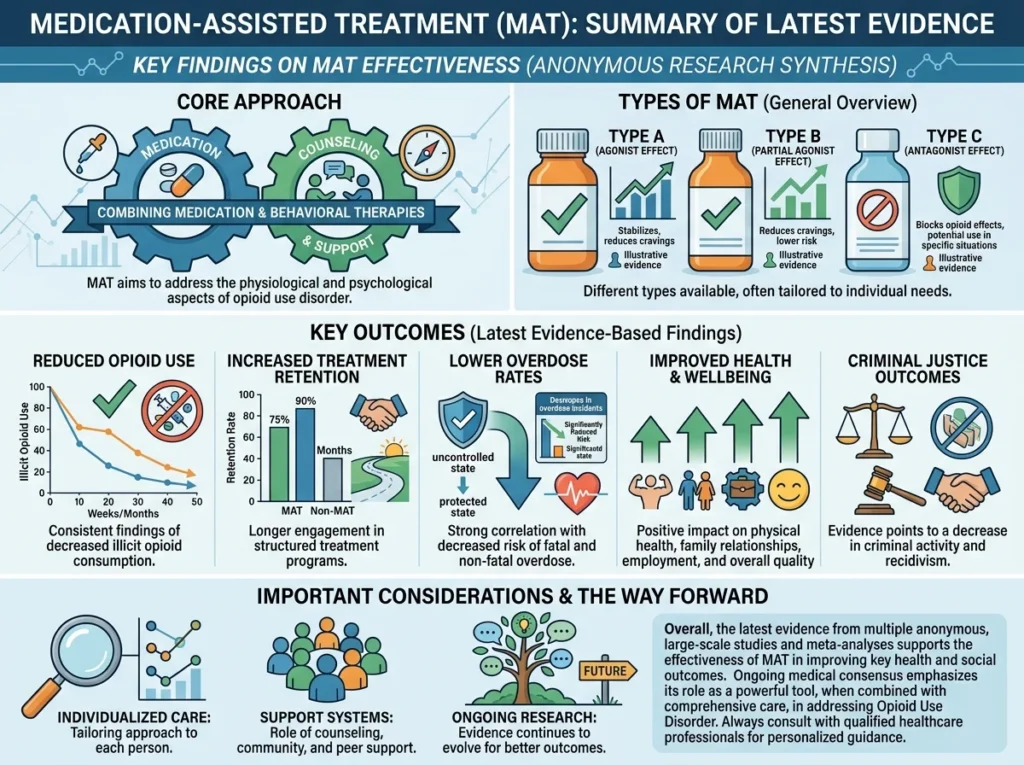
Current federal guidance supports MAT treatment for substance use disorders as evidence-based care. Medications for opioid use disorder can be used to reduce illicit opioid use, withdrawal symptoms, the risk of overdoses, the risk of relapse, and improve treatment retention, according to SAMHSA.
The treatment gap also provides important context. SAMHSA’s 2024 National Survey on Drug Use and Health estimated there were 4.8 million people with OUD, with only 17% (818,000) getting medication to treat OUD over the past year. Only about 1.3 million (an estimated 0.5%) of those with alcohol use disorder (27.9 million) were prescribed AUD medications.
These are not MAT success rates. They demonstrate that, in spite of effective treatment, access and treatment engagement continue to be significant barriers.
Local Context: Why MAT Matters in Pompano Beach
Pompano Beach is located in Broward County; thus, public health data at the county level can serve as a useful context to some extent. Florida Department of Health data recorded 306 opioid overdose deaths in Broward County in 2024. Opioid-related deaths in Florida dropped 26% from 2023 to 2024.
While those improvements are promising, it shouldn’t be seen as a lack of need for opioid addiction treatment. A lower death count is not the same as a lower need for treatment, and overdose data does not measure every person living with opioid use disorder.
The number of prescription medications is another local figure. According to the CDC, in 2024, there were 26.1 opioid prescriptions dispensed per 100 persons in Broward County. Prescription dispensing is not a measure of addiction, but it does help to put the opioid environment in the area into perspective.
What Can Improve MAT Recovery Outcomes?

Medication is usually a component of addiction treatment, and not the only treatment. Outcomes can improve when treatment also addresses behavioral, medical, and practical barriers.
1. The Right Medication and Treatment Plan
The actions of methadone, buprenorphine, and naltrexone are not the same. Medication management should be based on the diagnosis, medical history, treatment goals, and medical needs of the individual. The one-size-fits-all approach is not an evidence-based addiction treatment. Providers can tailor treatment to the individual’s needs and provide flexibility in medication and support based on changes in recovery needs.
2. Behavioral Therapy and Counseling
People can learn to identify their triggers and to learn techniques to prevent relapse through cognitive behavioral therapy and other types of behavioural counselling. Therapy can also address mental health issues or other issues that can impact treatment engagement. While medication helps to decrease cravings and withdrawal symptoms, behavioral support can help with patterns and challenges that medications can’t fix.
3. Consistent Treatment Engagement
Treatment retention is one of the most important MAT recovery outcomes. Repeat engagement provides time for patients to stabilize their medication, deal with setbacks, and develop recovery skills. Medication adherence can be impacted by transportation, work schedules, side effects, cost, and stigma. Overcoming those obstacles may be as crucial as making the medication choice.
4. Support Outside the Appointment
Long-term recovery can be impacted by family members, peer support, support groups, housing stability, and employment. While a medicine can help with the physical symptoms, recovery may require help in several areas of a person’s life. This is why holistic care is more beneficial than just relying on medications.
MAT vs. Abstinence-Only Treatment
MAT is not about forcing someone with an opioid or alcohol use disorder to maintain recovery without medication; it’s about treating the person as a clinical case. But it’s not an excuse to take drugs for everyone.
The federal guidance acknowledges that medication is an effective treatment for opioid use disorder (OUD), which increases treatment retention, decreases the risk of illicit opioid use and overdose, and improves survival. Outpatient, residential, or other services are still needed depending on the person.
| Approach | Main Focus | Potential Role |
| MAT with comprehensive care | Medication plus clinical and behavioral support | Can reduce cravings, withdrawal, and overdose risk while supporting retention |
| Behavioral treatment without medication | Counseling and recovery skills | May be appropriate in some situations, depending on clinical needs |
| Detoxification alone | Short-term withdrawal management | Helps manage withdrawal in the short term but does not provide continued treatment for OUD |
What MAT Cannot Promise
Even after treatment, a relapse may be possible. The recovery process from substance use disorders can be complex, and the treatment may need to be adjusted or go slightly off track.
Success also does not always mean stopping medication after a fixed number of weeks or months. For some, longer-term medication therapy is helpful and can be done under medical supervision. Treatment duration should not be based on a fixed period but on clinical needs.
For people seeking an outpatient MAT program or addiction treatment in Pompano Beach, intensive outpatient treatment may provide a more structured level of support while allowing some people to maintain work, school, or home responsibilities. The more useful question is whether care is individualized and whether outcomes are monitored over time. Minds Over Matter can help patients explore available treatment approaches without reducing recovery to a single percentage.
Frequently Asked Questions
How effective is MAT treatment?
MAT works. There’s strong evidence for it, especially if we’re talking about opioid use disorder. Federal guidelines back it up because medication cuts cravings and withdrawal, lowers the risk of overdose, keeps people coming back to treatment, and reduces illegal opioid use. That said, every person’s outcome depends on things like their diagnosis, the specific medication, how involved they are in treatment, and the support they get.
Does MAT reduce relapse?
Yes, MAT helps people avoid relapse because it manages cravings, eases withdrawal, and helps keep someone engaged in treatment. It cannot guarantee that relapse will never occur. Medication management, behavioral counseling, and recovery support can address factors that medication alone cannot resolve.
What is the latest local opioid overdose data for the Pompano Beach area?
Pompano Beach falls under Broward County, and in 2024, the Florida Department of Health recorded 306 opioid overdose deaths there. This figure provides local context for the need for evidence-based treatment, but it is not a MAT success rate.
How long should someone stay on MAT?
Honestly, there’s no single answer. How long someone stays on MAT depends on the medication, the diagnosis, how they respond to treatment, and their own unique situation. Big decisions like starting, changing, or stopping medication should always be made with an experienced healthcare provider.
Final Thoughts: Recovery Outcomes Are More Than One Percentage
Medication-Assisted Treatment shows its worth through real results fewer overdoses, better retention in treatment, less substance use, and moving toward a more stable life. The numbers coming out of Broward County make it clear: local access to proven opioid addiction treatment still matters.
When comparing treatment options, look beyond advertised recovery percentages. The more useful question is whether a program offers appropriate medication management, behavioral support, ongoing follow-up, and an individualized plan. Contact Minds Over Matter can help patients explore that process with a focus on measurable progress and long-term recovery.