

Choosing to take Medication-Assisted Treatment (MAT) is no easy decision to make based on a checklist of symptoms. MAT can be a beneficial component of recovery for people with opioid use disorder (OUD) or alcohol use disorder (AUD), but not for everyone who uses the drugs.For these people, their substance use, health and treatment history, and recovery goals will determine which MAT treatment options may be best.
A proper evaluation looks at more than whether someone experiences cravings or withdrawal. A health care professional takes into account the severity of the problem, the health care and medications the person is taking, past health care and treatment, mental health needs, and the need for recovery support.
If you are wondering who qualifies for MAT in Pompano Beach, then read this extensive guide to understand how some factors might make you the best fit and what to anticipate during a treatment evaluation.
What Does MAT Actually Treat?
Medication-Assisted Treatment (MAT) is a substance use disorder treatment that includes the use of FDA-approved medications in the care for some SUDs. In the treatment of opioid use disorder, healthcare providers can use certain medications approved by the U.S. Food and Drug Administration (FDA) as components of an overall strategy, including methadone, buprenorphine, and naltrexone. The drugs are not the same and may be effective for different individuals.
Treatment is not simply about taking medication and stopping there. This MAT treatment guide explains how medication, counseling, behavioral therapy, and recovery support can work together. Combined treatments should be designed individually, not for the masses, states SAMHSA.
MAT and Opioid Use Disorder
Opioid users frequently experience cravings, withdrawal symptoms, and are unable to reduce their use, or continue to use opioids despite experiencing negative physical effects or behavioral problems stemming from their use.
Some people may be able to get their lives more stable by taking medications to decrease drug cravings and withdrawal effects, and to help them engage more fully in other aspects of their recovery program. The 3 FDA-approved medications for OUD are buprenorphine, methadone, and naltrexone.
MAT and Alcohol Use Disorder
Medications can also be used to treat alcohol use disorder. Medications approved by the FDA for treating AUD include naltrexone, acamprosate, and disulfiram (sometimes used in combination with counseling and behavioral therapy).
Treatment with the correct medication depends on the person’s medical history and treatment needs. The decision on whether or not to use medication and which one is right should be made by a healthcare provider.
Who May Be a Good Candidate for MAT?
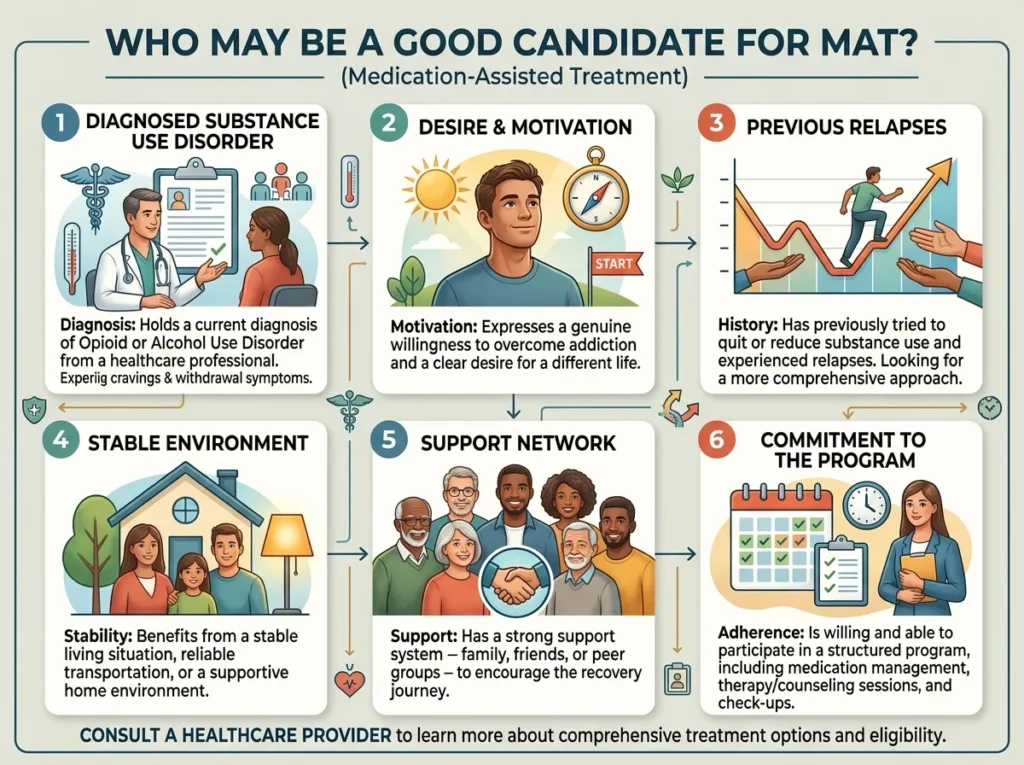
There is no single test to determine eligibility for MAT. Rather, a thorough evaluation by an addiction specialist or other qualified health care provider is carried out to learn about an individual’s situation and decide upon a suitable treatment strategy.
A person might be a candidate if they are also experiencing problems with the use of substances, and medications may safely help them recover.
Common Factors Considered During an Evaluation
A treatment assessment may look at:
- The type of substance being used
- Severity of the substance use disorder
- Frequency and duration of use
- Current cravings or withdrawal symptoms
- Previous treatment attempts
- History of relapse
- Current physical health
- Mental health concerns
- Other medications or substances being used
- Recovery goals
- Available family or peer support
- Appropriate level of care
A person does not necessarily need to have tried other forms of treatment first. MAT can be considered an evidence-based treatment option based on the person’s clinical needs. Medications are a treatment option for OUD, not one that should be used when other methods are ineffective, according to FDA and SAMHSA guidance.
Signs That a MAT Assessment May Be Worth Considering
Some people are aware that they require assistance but are not sure if the issue is serious enough to look for treatment. Delayed treatment does not serve any useful purpose, as substance use tends to worsen over time.
Consider speaking with a healthcare provider if you are experiencing patterns such as:
- Strong or persistent cravings
- Withdrawal symptoms when reducing or stopping use
- Repeated attempts to stop without lasting success
- Continued substance use despite negative consequences
- Increasing reliance on opioids or alcohol to function normally
- Relapse after previous treatment
- Difficulty maintaining daily responsibilities because of substance use
- Concern about overdose or other health consequences
These signs do not automatically mean MAT is the correct treatment. They indicate that a professional addiction treatment evaluation in Pompano Beach may be appropriate.
What Happens During a MAT Assessment?
The aim of a MAT assessment is to identify the type of care that is suitable, rather than just to approve or refuse a person for medication.
The provider might take questions regarding past drug or alcohol use, medical history, past treatment, mental health, medications, and symptoms. Further medical assessment and/or investigations may also be needed, depending on the circumstances.
The Assessment May Consider Four Key Areas
Substance use: The provider should be able to describe the substance being used, how frequently it is used, and its impact on life.
Physical health: Medical conditions, medications, allergies, pregnancy status when relevant, and other health factors can influence treatment decisions.
Mental health: Anxiety, depression, trauma, or other behavioral health concerns may need to be addressed alongside substance use.
Recovery needs: The provider considers whether outpatient treatment, a more structured level of care, counseling, peer support, or other services may be appropriate.
The goal is to create an individualized treatment plan rather than automatically placing every patient on the same medication or schedule.
| Helpful Note: Being evaluated for MAT does not mean you are committing to a particular medication. The assessment gives a qualified provider the information needed to discuss appropriate treatment options with you. |
Which Medications May Be Used?
Medication will depend on the substance use disorder and medical situation of the patient. The three FDA-approved medications for OUD are methadone, buprenorphine, and naltrexone.
| Medication | Common Treatment Use | Key Consideration |
| Methadone | Opioid use disorder | Medications are available for OUD at certified opioid treatment programs |
| Buprenorphine | Opioid use disorder | Helps reduce opioid withdrawal and cravings |
| Naltrexone | Opioid and alcohol use disorders | Blocks opioid effects and can reduce cravings |
Methadone is a long-acting opioid medication used to treat OUD and, for confirmed OUD treatment, is dispensed through certified opioid treatment programs.
As a partial opioid agonist, buprenorphine can help lessen withdrawal symptoms and make cravings easier to manage. Products containing buprenorphine, including buprenorphine-naloxone such as Suboxone, are used to treat OUD.
Naltrexone works differently by blocking opioid receptors. It is FDA-approved for both OUD and AUD, with specific requirements that need to be considered before treatment begins.
MAT Is More Than Medication
Medication may be a component of a comprehensive treatment program. Counselling and behavioral therapies may help individuals learn more about what might be leading them to use substances, learn coping skills, learn to manage triggers, and learn to work towards long-term recovery.
This is important because both medication and therapy can help with behavioral and emotional issues, and medication can be used to help with cravings and withdrawal.
What Additional Support May Include
Depending on individual needs, a treatment plan may involve:
- Individual counseling
- Behavioral therapy
- Group or peer support
- Mental health support
- Medication management
- Relapse prevention planning
- Recovery education
- Family involvement when appropriate
According to SAMHSA, treatment can evolve as a person’s needs and response to treatment evolve over time. Some require a more intensive specialty treatment, whereas others benefit from primary care-based treatment.
Does Needing MAT Mean You Have Failed at Recovery?
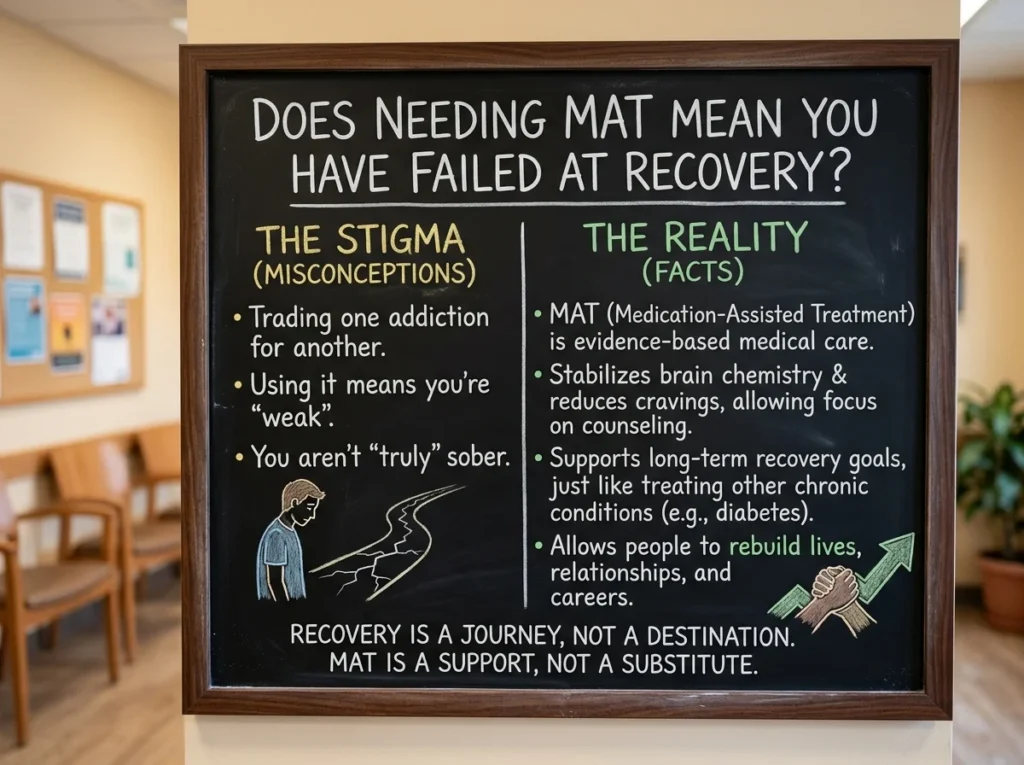
Don’t assume that if somebody needs medication, they are not motivated or unsuccessful in their recovery.
Substance use disorders can include brain chemistry changes, dependency, cravings, and behavioral patterns, which can be hard to manage without drug use. Evidence-Based Treatment provides individuals with extra tools to help them meet those challenges.
No one is required to have experienced failure with an abstinence-only program before talking about medication treatment. The right plan will depend on clinical needs and goals for recovery.
For someone researching a MAT program in Pompano Beach, FL, the more useful question is not whether medication represents “success” or “failure.” It is whether the treatment approach can safely address the person’s needs and support meaningful recovery.
When MAT May Not Be the Only Level of Care Needed
While medication is a suitable treatment for many, MAT may not be the only treatment that works for everyone.
Someone experiencing severe withdrawal, serious medical complications, significant mental health concerns, or an unsafe home environment may require a more structured level of care. Depending on the assessment, this could include medically supervised withdrawal management, inpatient treatment, residential care, or intensive outpatient services.
Care can vary during the journey to recovery. Someone can start on a more intensive level of care and move to outpatient services as they get more stable.
The Important Point
Don’t judge your level of care by a checklist on the Internet. Your healthcare provider will be able to evaluate your symptoms, health, drug use, and support, and then make the best recommendation.
What Makes a MAT Program a Good Fit?
Once someone is considered a candidate, the next question is whether the specific program fits their needs.
Look for a treatment setting that offers:
- Qualified medical oversight
- Individualized treatment planning
- Medication management
- Counseling or behavioral therapy
- Clear communication about treatment goals
- Relapse prevention support
- Referrals to a higher level of care when necessary
- Ongoing monitoring of progress
A good program will also enable patients to ask questions about medication, side effects, how long treatment will last, and what will happen if the patient’s needs change.
For people exploring treatment options locally, Minds Over Matter can be one organization to discuss available recovery services and determine what type of professional evaluation may be appropriate.
Frequently Asked Questions
Who qualifies for MAT in Pompano Beach?
Qualifications vary according to substance addiction, medical history, and specific needs. A person’s treatment should be recommended by a qualified health care provider before administering a particular medication or treatment.
Can someone receive MAT for alcohol use disorder?
Yes. Medications such as naltrexone, acamprosate, and disulfiram are FDA-approved to treat alcohol use disorder. Medication can be used in a comprehensive recovery program along with counseling and behavioral therapies.
Do I have to try other addiction treatments before MAT?
No. MAT is not necessarily a treatment option that a person should try after an unsuccessful attempt with another approach. Treatment decisions should be based on clinical needs, medical safety, and recovery goals.
Is MAT only for people with severe addiction?
Not necessarily. Eligibility is based on the individual’s assessment, not a severity label. A healthcare provider takes into account substance use patterns, health, withdrawal, cravings, prior treatment, and other factors.
How long does MAT treatment last?
There is no universal treatment length. Medication can be used for months at a time, or for longer periods of time. The length of time should be assessed by a knowledgeable health care provider depending on response, safety, and recovery requirements.
Can MAT include counseling?
Yes. Treatment may include counseling and behavioral therapies. These specific services will be based on the individual’s needs and the level of care recommended.
Finding Out Whether MAT Is Right for You
If you find it hard to stop using opioids or alcohol yourself, you’re not alone when it comes to deciding if you qualify for treatment. A professional evaluation can assist in determining the level of the SUD, the medical and behavioral health requirements, and whether medication-based treatment is indicated.
A one-size-fits-all checklist is not the right approach to identifying the right medication-assisted treatment (MAT) candidate in Pompano Beach, FL; instead, individualized evaluation is used. With appropriate medical oversight, medication management, counseling, and recovery support, treatment can address both immediate challenges and longer-term recovery goals. If you have questions about available services or the evaluation process, you can contact Minds Over Matter to discuss your options.