
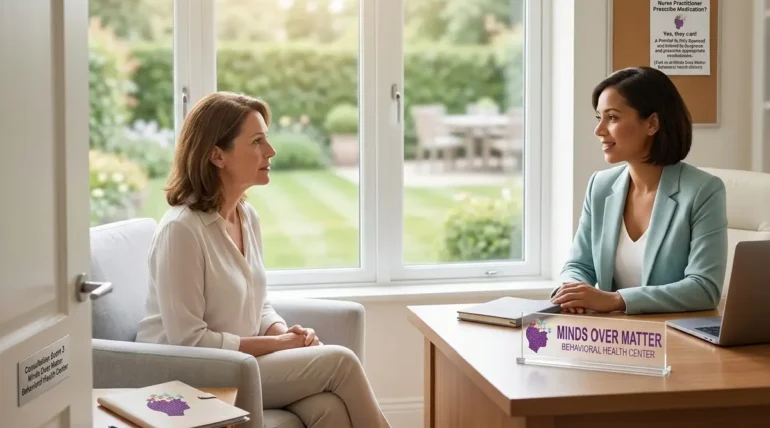
If you are considering mental health treatment, one of the most common and important questions is: can a psychiatric nurse practitioner prescribe medication?
This question comes up because many people assume only psychiatrists or medical doctors can prescribe psychiatric medications. In reality, psychiatric nurse practitioners play a major role in mental health care across the United States, including in Florida and areas like Pompano Beach.
They are highly trained advanced practice providers who can diagnose mental health conditions, create treatment plans, and prescribe psychiatric medications when appropriate. However, their prescribing authority depends on state laws and clinical practice guidelines.
In this article, you will learn exactly how psychiatric nurse practitioners work. What medications they can prescribe. How they compare to psychiatrists, and what to expect during treatment.
What Is a Psychiatric Nurse Practitioner?
A Psychiatric Mental Health Nurse Practitioner (PMHNP) is an advanced practice registered nurse (APRN) with specialized training in mental health care. Unlike a general nurse, a PMHNP completes graduate-level education (master’s or doctoral degree) along with supervised clinical psychiatric training.
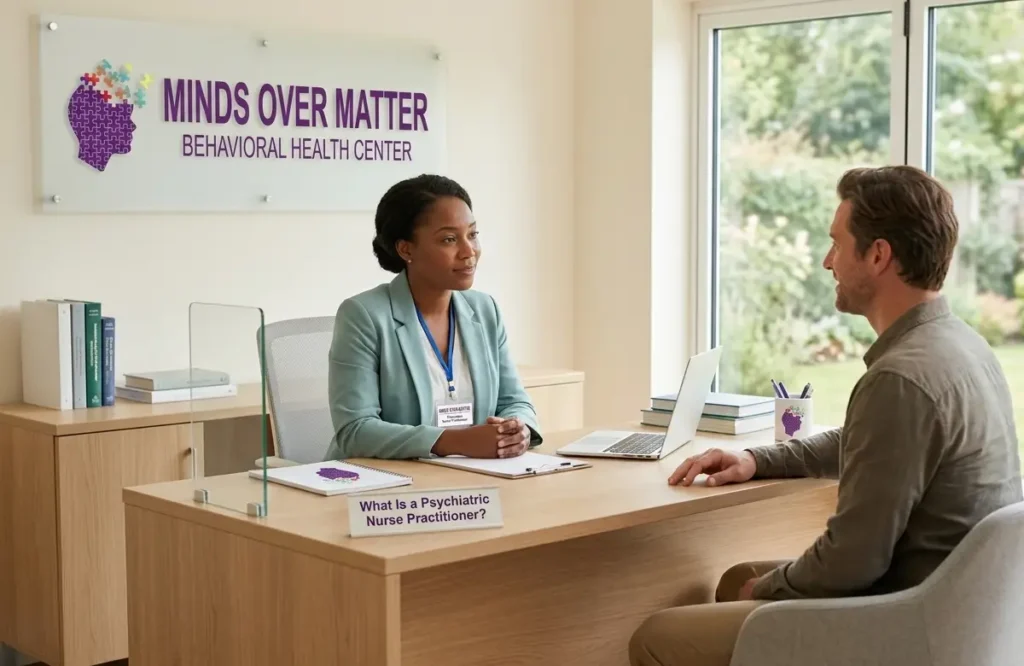
Their role focuses on diagnosing and treating mental health conditions across different patient populations.
A psychiatric nurse practitioner is trained to:
- Conduct psychiatric evaluations
- Diagnose mental health disorders
- Develop treatment plans
- Provide therapy or supportive counseling
- Prescribe psychiatric medications
- Monitor long-term treatment progress
In simple terms, they combine both clinical mental health expertise and medication management skills into one role. This makes them an accessible and effective option for patients who need both therapy and medication support.
Can a Psychiatric Nurse Practitioner Prescribe Medication?
Yes — psychiatric nurse practitioners can prescribe medication.
In most U.S. states, including Florida, PMHNPs are legally allowed to prescribe psychiatric medications. This includes medications used to treat depression, anxiety, ADHD, bipolar disorder, and other mental health conditions.
However, the level of independence depends on state regulations:
- Full practice states: PMHNPs can prescribe independently
- Reduced practice states (like Florida): They may work with a collaborative physician agreement
- Restricted states: They may require more supervision
Even in reduced practice states, psychiatric nurse practitioners still routinely evaluate patients, prescribe medications, and manage ongoing treatment.
What Medications Can a Psychiatric Nurse Practitioner Prescribe?
Psychiatric nurse practitioners are trained to prescribe a wide range of mental health medications based on patient needs.
Common medication categories include:
1. Antidepressants
Used for depression, anxiety, PTSD, and mood disorders.
Examples include SSRIs and SNRIs.
2. Anti-anxiety medications
Used to manage generalized anxiety disorder and panic symptoms.
3. Mood stabilizers
Used for bipolar disorder and emotional regulation.
4. ADHD medications
Used to improve focus, attention, and impulse control.
5. Antipsychotic medications
Used for schizophrenia, severe mood disorders, or psychotic symptoms.
Medication selection is always based on a full psychiatric evaluation, medical history, and patient-specific factors.
How Medication Management Works
Prescribing medication is only one part of psychiatric care. The most important part is ongoing medication management.
Medication management ensures that treatment remains safe, effective, and adjusted over time based on patient response. Medication management is a structured and supportive process designed for long-term mental wellness.
Medication management typically includes:
1. Initial psychiatric evaluation
A full assessment of symptoms, mental health history, and concerns.
2. Diagnosis and treatment planning
Identifying the condition and choosing the right treatment approach.
3. Medication prescription
If needed, medication is prescribed based on clinical judgment.
4. Follow-up appointments
Regular visits to monitor progress and side effects.
5. Adjustments when needed
Dosage or medication changes based on response.
This process ensures treatment is not static, but continuously optimized.
Why Medication Management Is Important
Mental health medications are not one-size-fits-all. Every person responds differently.
Without proper monitoring, medications may:
- Take longer to work
- Cause unwanted side effects
- Require dosage adjustments
- Need switching to another medication
Proper medication management helps:
- Improve treatment outcomes
- Reduce side effects
- Ensure safe prescribing
- Provide long-term stability
- Personalize mental health care
This is why ongoing care is essential instead of one-time prescriptions.
Psychiatric Nurse Practitioner vs Psychiatrist
Many people confuse psychiatric nurse practitioners with psychiatrists. Both can prescribe medication, but their training and approach differ.
| Feature | Psychiatric Nurse Practitioner | Psychiatrist |
| Education | Nursing + advanced degree | Medical doctor (MD/DO) |
| Prescribing ability | Yes | Yes |
| Focus | Holistic care + patient support | Medical model + complex cases |
| Appointment style | Often longer, more frequent visits | Often shorter visits |
Key takeaway:
Both providers are qualified to treat mental health conditions and prescribe medication. The choice depends on patient preference, availability, and treatment needs.
Mental Health Care in Florida (Including Pompano Beach)
Mental health conditions such as anxiety, depression, and ADHD are common across Florida, including areas like Pompano Beach.
Many individuals experience:
- Persistent sadness
- Anxiety or panic attacks
- Low motivation or energy
- Difficulty concentrating
- Sleep disturbances

Without mental health treatment, these symptoms can impact daily functioning, relationships, and overall quality of life.
Psychiatric nurse practitioners in Florida help improve access to care by offering:
- Medication management
- Psychiatric evaluations
- Telehealth services
- Ongoing treatment support
This makes mental health care more accessible and consistent for local communities.
When Should You See a Psychiatric Nurse Practitioner?
You may benefit from seeing a psychiatric nurse practitioner if you are experiencing:
- Ongoing depression or sadness
- Anxiety that affects daily life
- Difficulty focusing or ADHD symptoms
- Mood swings or emotional instability
- Panic attacks
- Sleep problems related to mental health
You should also seek help if:
- Therapy alone is not enough
- Symptoms are worsening
- You need medication evaluation or adjustment
Early treatment often leads to better outcomes.
Frequently Asked Questions
Can a psychiatric nurse practitioner prescribe medication independently?
Yes, but in states like Florida, they may work under collaborative agreements depending on practice settings.
Is a psychiatric nurse practitioner qualified to prescribe medication?
Yes. They are advanced practice providers with specialized psychiatric training.
Do I need a psychiatrist to get medication?
No. A psychiatric nurse practitioner can evaluate, diagnose, and prescribe medication.
What is medication management in psychiatry?
It is the ongoing process of prescribing, monitoring, and adjusting psychiatric medications for safety and effectiveness.
Are psychiatric medications safe?
Yes, when prescribed and monitored by a qualified provider.
Conclusion
Psychiatric nurse practitioners are highly trained mental health professionals who can prescribe medication in most states, including Florida.
They play a vital role in mental health care by diagnosing conditions, prescribing medications when needed, and providing ongoing treatment management. If you are struggling with anxiety, depression, ADHD, or other mental health concerns, working with a psychiatric nurse practitioner can be an effective and accessible path to treatment.