
back to top
Healing from Domestic Abuse Effects of DV and How to Recover Safely Domestic abuse causes stern marks, but it can be healed. You are not the only person who experienced physical violence in a relationship and other types of family violence. Thousands of individuals can courageously manage the aftermath of DV, but many people cannot cope with this problem. This post expounds on the impacts of family violence and the effective healing of domestic abuse. We will discuss the long-term and short-term effects it has on you, why it can be hard to get over, and how you can recover without losing yourself in domestic violence. Hang around, you may have the hope you want. What Are the Effects of DV Domestic violence is not a single instance of a fight. It is a cycle of domination, intimidation, and abuse that lingers in the long-term. The effects of DV ripple in your body, mind, and everyday life, such that even the elementary activities are daunting. Physical Toll of Violence in Relationships Consider the corporeal force of the relationship. Bruises are temporary, and a hit on the bone or constant hitting may cause persistent pain, such as chronic headaches or back problems. Mental and Emotional Scars The psychological consequences of family violence present themselves psychologically as being unable to jump at a shadow (anxiety) or unable to enjoy yourself (depression). I have interviewed survivors who lost faith in everyone, including themselves. Sleep is a victim, as well; you can repeat the nightmares with the horrors and feel exhausted. It is emotionally slow to bounce back after being abused since DV destroys your self-confidence. You may see yourself as useless, as what the abuser said was what became true to you. Friendship or family life is not good because shame keeps you out. ​Impact on Kids and Families Children in the house experience the consequences of DV themselves, such as fear or anger problems, which accompany them into adulthood. A long-term and untreated impact of family violence increases the risk of heart disease, PTSD, or even substance use to disregard the pain. How DV Hits Work, Money, and Social Life Where does it hit hardest Work becomes a victim of poor concentration and bosses see the days they hire and fire. Money tanking up on concealing injuries or making a sudden escape. Socially, you draw away, not getting support. The Science Behind Long-Term Harm The consequences of DV are not in your imagination; research in such locations as the CDC has revealed that survivors experience more migraines, arthritis and problems with their digestive systems years following. It is a complete physical betrayal that has to be noticed. Healing from Domestic Abuse Understanding Effects and Safe Recovery The recovery process of domestic abuse begins with the truth, which is that domestic violence leaves a profound impact on you, but there is a way to heal. The consequences of DV are not scratches, but an emotional tsunami and physical scars that may be long lasting in case neglected. And here we will dissect it straight and out, using real-life examples, so that you will see it is not your fault and that you can heal. Physical Effects of Family Violence To begin with, understand how family violence affects your body. Violence in a relationship is usually physical, which implies repetitive injuries. I have a survivor, Sarah, who was slapped and punched throughout her life. Her ribs grew lame, which hurts her to take a deep breath to this day. All the typical consequences of DV are head injury and loss of memory or dizziness. Females are more vulnerable to reproductive injuries, such as preterm abortions, due to kicks on the stomach. Men are not spared either, as they find the broken jaws or internal bleeding that the doctors overlook at first. This stress, in the long run, makes you older, raises blood pressure and increases the odds of diabetes. ​Brain and Mental Health Impacts Your brain takes a hit, too. Domestic violence recovery involves addressing PTSD, whereby a bang in a car causes you to flee. DV is associated with effects akin to those of war hypervigilance makes you look around to see if you are in danger. Depression insidiously comes in and beds become the only place of security. Panic attacks resemble heart complications, and they take you to the emergency room. I have heard of survivors losing their employment due to being frozen halfway through a meeting with panic. Children who experience physical violence within a relationship become subject to attachment disorders, either too clingy or too rejective. Emotional and Family Fallout Abuse is something one cannot get over without feeling as though one is emerging out of a pit emotionally. Abusers dominate by terror, with tongues as sharp as swords. You're nothing without me rings long when they are gone. Self-incrimination prospers; why not leave it so long Shame makes you an outcast with the people who do not understand. Impacts of family violence divide families; holidays become stressful with past wrongs being re-enacted. One woman told how the threats of suicide by her abuser put her in a ten-year trap, with a feeling of guilt that is gradually being redefined through therapy. Social, Financial, and Legal Struggles The impact of DV makes the world smaller socially. Reliability is gone, dating becomes dangerous and friends disappear due to cancelation of the plans. Chains of financial abuse Destroyed credit through their expenditures or the existence of hidden bank accounts. Restraining orders are helpful in a legal sense, but the stress of court reopens wounds. In the long run, unassisted, the consequences of family violence results to homelessness or addiction as the means of coping collapse. Step 1 Prioritize Safety in Healing Here is the hope, though The question of how to recover after domestic violence. First come first served, always go nowhere alone. Calls to contact hotlines such as the National Domestic Violence Hotline to get the safest way out. They trace shelters, link you with the advocates. Go away with a go-bag money, documents, drugs. Block the abuser everywhere. Step 2 Therapy and Emotional Tools Your healing tool for domestic abuse is therapy. Fear responses are rewired by trauma-focused CBT. EMDR cancels flashbacks with one button. Group support, as in local YWCAs, is reminding you Other people receive it. Writing is also a way out; jot down the unseemly facts to own your story. There is one of my acquaintances who wrote letters to himself and set them on fire in a fire pit. Step 3 Build Daily Recovery Routines Create a domestic violence recovery routine. Light movement, brisk walks and yoga restore confidence in the body. Diet is important; DV stress kills your cells, thus pack on vegetables and proteins. Sleep hygiene Low lighting, no television, perhaps chamomile tea. Mindfulness applications educate people to breathe to stop panic spirals. Step 4 Reconnect and Handle Practical Needs Reconnect slowly. Start with safe people, a sister or an old friend. Set boundaries I share when ready. Legal aid seals protection orders. Financially, credit counseling rebuilds scores. For kids, play therapy heals the effects of DV. Long-Term Coping Strategies The long-term strategies are brilliant in the way to deal with domestic abuse. The most important tip, in this regard, is self-compassion, i.e., speaking to yourself as a friend does You survived; that’s strength. Painting, hiking, whatever makes you pre-abuse you, brings you joy. Pets are unconditional and unrejudgmental. Track progress on minor victories a nightmare-free night or saying no emphatically. Setbacks are to be expected; anniversaries cause the impact of family violence. That is all right; fall on your support net. Meds could be useful in the short term in severe cases of anxiety, but combine with therapy. Onthe spiritual front, others have peace in faith groups or meditation. Real Success Stories Success stories prove it. Maria went away following years of physical abuse in a relationship. The impact of DV was still felt, with night sweats and a lack of trust; however, after two years of therapy, she remarried and operates a bakery. Her mantra I choose me now. The process of healing the wounds of domestic abuse is not linear; it is in waves, and with every crash, a stronger strength is cut out. Holistic Professional Support Professionals emphasize holistic recovery. Physicians check on DV effects such as stress-related thyroid problems. Inflammation is combated by nutritionists. Custody fights are directed by lawyers. Rebuilding a life brick, which you lay safe with. Your Path to Thriving Briefly, DV impacts force you to have respect, but finding the way to overcome domestic violence makes you powerful. The safety plans, therapy, and routines make the survivors thrive. You have it; one step is into liberty. ​ Practical Tips for Recovering from Domestic Violence Ready for action The following are simple suggestions on how to begin healing after abuse. These are based on the survival tales and professional recommendations, with emphasis on safer and daily actions. Make a plan to be ready now Pack a bag (keys, phone, cash) somewhere where it cannot be found. Memorize hotline numbers. Share a signal with somebody who is close to you to call for help, such as a porch light being on. Find therapy according to DV Find therapy specialists on Psychology Today. Online classes ensure you are not exposed in case you find it difficult to leave. Record your victories Be sure to write down one strong decision each day, such as blocking the number of an ex. It builds proof of your power. Feed the body and mind Eat simple, whole foods- have oats in the morning, salads at noon, etc. Stroll for 20 minutes to exercise endorphins against depression. Rebuild money laundering Open a sham bank account. Monitor spending with apps such as Mint, where the abuser has no access. Strategies to Cope with Domestic Abuse Long-Term To achieve permanent recovery, these are the ones to be tried. They address family violence directly, which fosters resilience. Fiercely delimit Go through with no scripts I will not talk about my ex. Put some distance between the two. Participate in survivor communities Reddit has an online community of survivors on the subsubreddit rdomesticviolence. Face-to-face gatherings create physical connections. Ritualize self-care Take a walk with candles in the weekly baths or read motivational books such as Why Does He Do That by Lundy Bancroft. Check-in health care With physicals every year, long-term consequences of DV, such as high blood pressure, are identified. Congratulate milestones To celebrate the anniversary of escape, do something to be happy, such as take a trip on her own. Conclusion Healing from domestic abuse means acknowledging the effects of DV, from physical pain to emotional shadows, and taking brave steps toward safety and strength. You've learned the long-term impacts of family violence, how to heal from domestic violence, and tips for recovering from domestic violence. Recovery builds a freer, fuller life. To explore more resources on healing from abuse and safe recovery, visit Minds Over Matter. FAQs What are the main effects of DV Effects of DV include physical injuries, anxiety, depression, trust issues, and long-term health problems like chronic pain or PTSD. How do I start healing from domestic abuse Begin with a safety plan, call a hotline, and find a therapist. Small steps like journaling build momentum. What is physical violence in a relationship It's any harmful act like hitting, choking, or throwing objects to control or hurt your partner. How to cope with domestic abuse while still in it Focus on safety, document incidents, save money secretly, and confide in a safe person or hotline. Can kids recover from the effects of family violence Yes, with therapy, stable routines, and time. Play therapy helps them process trauma. How long does recovery from domestic violence take It varies, from months to years. Progress comes in waves, but support speeds healing. Is therapy essential for healing from abuse It's highly effective for unpacking trauma and rebuilding confidence. Many find it life-changing. Healing from Domestic Abuse Effects of DV and How to Recover Safely Domestic abuse causes stern marks, but it can be healed. You are not the only person who experienced physical violence in a relationship and other types of family violence. Thousands of individuals can courageously manage the aftermath of DV, but many people cannot cope with this problem. This post expounds on the impacts of family violence and the effective healing of domestic abuse. We will discuss the long-term and short-term effects it has on you, why it can be hard to get over, and how you can recover without losing yourself in domestic violence. Hang around, you may have the hope you want. What Are the Effects of DV Domestic violence is not a single instance of a fight. It is a cycle of domination, intimidation, and abuse that lingers in the long-term. The effects of DV ripple in your body, mind, and everyday life, such that even the elementary activities are daunting. Physical Toll of Violence in Relationships Consider the corporeal force of the relationship. Bruises are temporary, and a hit on the bone or constant hitting may cause persistent pain, such as chronic headaches or back problems. Mental and Emotional Scars The psychological consequences of family violence present themselves psychologically as being unable to jump at a shadow (anxiety) or unable to enjoy yourself (depression). I have interviewed survivors who lost faith in everyone, including themselves. Sleep is a victim, as well; you can repeat the nightmares with the horrors and feel exhausted. It is emotionally slow to bounce back after being abused since DV destroys your self-confidence. You may see yourself as useless, as what the abuser said was what became true to you. Friendship or family life is not good because shame keeps you out. ​Impact on Kids and Families Children in the house experience the consequences of DV themselves, such as fear or anger problems, which accompany them into adulthood. A long-term and untreated impact of family violence increases the risk of heart disease, PTSD, or even substance use to disregard the pain. How DV Hits Work, Money, and Social Life Where does it hit hardest Work becomes a victim of poor concentration and bosses see the days they hire and fire. Money tanking up on concealing injuries or making a sudden escape. Socially, you draw away, not getting support. The Science Behind Long-Term Harm The consequences of DV are not in your imagination; research in such locations as the CDC has revealed that survivors experience more migraines, arthritis and problems with their digestive systems years following. It is a complete physical betrayal that has to be noticed. Healing from Domestic Abuse Understanding Effects and Safe Recovery The recovery process of domestic abuse begins with the truth, which is that domestic violence leaves a profound impact on you, but there is a way to heal. The consequences of DV are not scratches, but an emotional tsunami and physical scars that may be long lasting in case neglected. And here we will dissect it straight and out, using real-life examples, so that you will see it is not your fault and that you can heal. Physical Effects of Family Violence To begin with, understand how family violence affects your body. Violence in a relationship is usually physical, which implies repetitive injuries. I have a survivor, Sarah, who was slapped and punched throughout her life. Her ribs grew lame, which hurts her to take a deep breath to this day. All the typical consequences of DV are head injury and loss of memory or dizziness. Females are more vulnerable to reproductive injuries, such as preterm abortions, due to kicks on the stomach. Men are not spared either, as they find the broken jaws or internal bleeding that the doctors overlook at first. This stress, in the long run, makes you older, raises blood pressure and increases the odds of diabetes. ​Brain and Mental Health Impacts Your brain takes a hit, too. Domestic violence recovery involves addressing PTSD, whereby a bang in a car causes you to flee. DV is associated with effects akin to those of war hypervigilance makes you look around to see if you are in danger. Depression insidiously comes in and beds become the only place of security. Panic attacks resemble heart complications, and they take you to the emergency room. I have heard of survivors losing their employment due to being frozen halfway through a meeting with panic. Children who experience physical violence within a relationship become subject to attachment disorders, either too clingy or too rejective. Emotional and Family Fallout Abuse is something one cannot get over without feeling as though one is emerging out of a pit emotionally. Abusers dominate by terror, with tongues as sharp as swords. You're nothing without me rings long when they are gone. Self-incrimination prospers; why not leave it so long Shame makes you an outcast with the people who do not understand. Impacts of family violence divide families; holidays become stressful with past wrongs being re-enacted. One woman told how the threats of suicide by her abuser put her in a ten-year trap, with a feeling of guilt that is gradually being redefined through therapy. Social, Financial, and Legal Struggles The impact of DV makes the world smaller socially. Reliability is gone, dating becomes dangerous and friends disappear due to cancelation of the plans. Chains of financial abuse Destroyed credit through their expenditures or the existence of hidden bank accounts. Restraining orders are helpful in a legal sense, but the stress of court reopens wounds. In the long run, unassisted, the consequences of family violence results to homelessness or addiction as the means of coping collapse. Step 1 Prioritize Safety in Healing Here is the hope, though The question of how to recover after domestic violence. First come first served, always go nowhere alone. Calls to contact hotlines such as the National Domestic Violence Hotline to get the safest way out. They trace shelters, link you with the advocates. Go away with a go-bag money, documents, drugs. Block the abuser everywhere. Step 2 Therapy and Emotional Tools Your healing tool for domestic abuse is therapy. Fear responses are rewired by trauma-focused CBT. EMDR cancels flashbacks with one button. Group support, as in local YWCAs, is reminding you Other people receive it. Writing is also a way out; jot down the unseemly facts to own your story. There is one of my acquaintances who wrote letters to himself and set them on fire in a fire pit. Step 3 Build Daily Recovery Routines Create a domestic violence recovery routine. Light movement, brisk walks and yoga restore confidence in the body. Diet is important; DV stress kills your cells, thus pack on vegetables and proteins. Sleep hygiene Low lighting, no television, perhaps chamomile tea. Mindfulness applications educate people to breathe to stop panic spirals. Step 4 Reconnect and Handle Practical Needs Reconnect slowly. Start with safe people, a sister or an old friend. Set boundaries I share when ready. Legal aid seals protection orders. Financially, credit counseling rebuilds scores. For kids, play therapy heals the effects of DV. Long-Term Coping Strategies The long-term strategies are brilliant in the way to deal with domestic abuse. The most important tip, in this regard, is self-compassion, i.e., speaking to yourself as a friend does You survived; that’s strength. Painting, hiking, whatever makes you pre-abuse you, brings you joy. Pets are unconditional and unrejudgmental. Track progress on minor victories a nightmare-free night or saying no emphatically. Setbacks are to be expected; anniversaries cause the impact of family violence. That is all right; fall on your support net. Meds could be useful in the short term in severe cases of anxiety, but combine with therapy. Onthe spiritual front, others have peace in faith groups or meditation. Real Success Stories Success stories prove it. Maria went away following years of physical abuse in a relationship. The impact of DV was still felt, with night sweats and a lack of trust; however, after two years of therapy, she remarried and operates a bakery. Her mantra I choose me now. The process of healing the wounds of domestic abuse is not linear; it is in waves, and with every crash, a stronger strength is cut out. Holistic Professional Support Professionals emphasize holistic recovery. Physicians check on DV effects such as stress-related thyroid problems. Inflammation is combated by nutritionists. Custody fights are directed by lawyers. Rebuilding a life brick, which you lay safe with. Your Path to Thriving Briefly, DV impacts force you to have respect, but finding the way to overcome domestic violence makes you powerful. The safety plans, therapy, and routines make the survivors thrive. You have it; one step is into liberty. ​ Practical Tips for Recovering from Domestic Violence Ready for action The following are simple suggestions on how to begin healing after abuse. These are based on the survival tales and professional recommendations, with emphasis on safer and daily actions. Make a plan to be ready now Pack a bag (keys, phone, cash) somewhere where it cannot be found. Memorize hotline numbers. Share a signal with somebody who is close to you to call for help, such as a porch light being on. Find therapy according to DV Find therapy specialists on Psychology Today. Online classes ensure you are not exposed in case you find it difficult to leave. Record your victories Be sure to write down one strong decision each day, such as blocking the number of an ex. It builds proof of your power. Feed the body and mind Eat simple, whole foods- have oats in the morning, salads at noon, etc. Stroll for 20 minutes to exercise endorphins against depression. Rebuild money laundering Open a sham bank account. Monitor spending with apps such as Mint, where the abuser has no access. Strategies to Cope with Domestic Abuse Long-Term To achieve permanent recovery, these are the ones to be tried. They address family violence directly, which fosters resilience. Fiercely delimit Go through with no scripts I will not talk about my ex. Put some distance between the two. Participate in survivor communities Reddit has an online community of survivors on the subsubreddit rdomesticviolence. Face-to-face gatherings create physical connections. Ritualize self-care Take a walk with candles in the weekly baths or read motivational books such as Why Does He Do That by Lundy Bancroft. Check-in health care With physicals every year, long-term consequences of DV, such as high blood pressure, are identified. Congratulate milestones To celebrate the anniversary of escape, do something to be happy, such as take a trip on her own. Conclusion Healing from domestic abuse means acknowledging the effects of DV, from physical pain to emotional shadows, and taking brave steps toward safety and strength. You've learned the long-term impacts of family violence, how to heal from domestic violence, and tips for recovering from domestic violence. Recovery builds a freer, fuller life. To explore more resources on healing from abuse and safe recovery, visit Minds Over Matter. FAQs What are the main effects of DV Effects of DV include physical injuries, anxiety, depression, trust issues, and long-term health problems like chronic pain or PTSD. How do I start healing from domestic abuse Begin with a safety plan, call a hotline, and find a therapist. Small steps like journaling build momentum. What is physical violence in a relationship It's any harmful act like hitting, choking, or throwing objects to control or hurt your partner. How to cope with domestic abuse while still in it Focus on safety, document incidents, save money secretly, and confide in a safe person or hotline. Can kids recover from the effects of family violence Yes, with therapy, stable routines, and time. Play therapy helps them process trauma. How long does recovery from domestic violence take It varies, from months to years. Progress comes in waves, but support speeds healing. Is therapy essential for healing from abuse It's highly effective for unpacking trauma and rebuilding confidence. Many find it life-changing. Healing from Domestic Abuse: Effects of DV and How to Recover Safely
10 Feb

Domestic abuse causes stern marks, but it can be healed. You are not the only person who experienced physical violence in a relationship and other types of family violence. Thousands of individuals can courageously manage the aftermath of DV, but many people cannot cope with this problem.

This post expounds on the impacts of family violence and the effective healing of domestic abuse. We will discuss the long-term and short-term effects it has on you, why it can be hard to get over, and how you can recover without losing yourself in domestic violence. Hang around, you may have the hope you want.

What Are the Effects of DV?

Domestic violence is not a single instance of a fight. It is a cycle of domination, intimidation, and abuse that lingers in the long-term. The effects of DV ripple in your body, mind, and everyday life, such that even the elementary activities are daunting.

Physical Toll of Violence in Relationships

Consider the corporeal force of the relationship. Bruises are temporary, and a hit on the bone or constant hitting may cause persistent pain, such as chronic headaches or back problems.

Mental and Emotional Scars

The psychological consequences of family violence present themselves psychologically as being unable to jump at a shadow (anxiety) or unable to enjoy yourself (depression). I have interviewed survivors who lost faith in everyone, including themselves. Sleep is a victim, as well; you can repeat the nightmares with the horrors and feel exhausted.

It is emotionally slow to bounce back after being abused since DV destroys your self-confidence. You may see yourself as useless, as what the abuser said was what became true to you.  Friendship or family life is not good because shame keeps you out.

​Impact on Kids and Families

Children in the house experience the consequences of DV themselves, such as fear or anger problems, which accompany them into adulthood. A long-term and untreated impact of family violence increases the risk of heart disease, PTSD, or even substance use to disregard the pain.

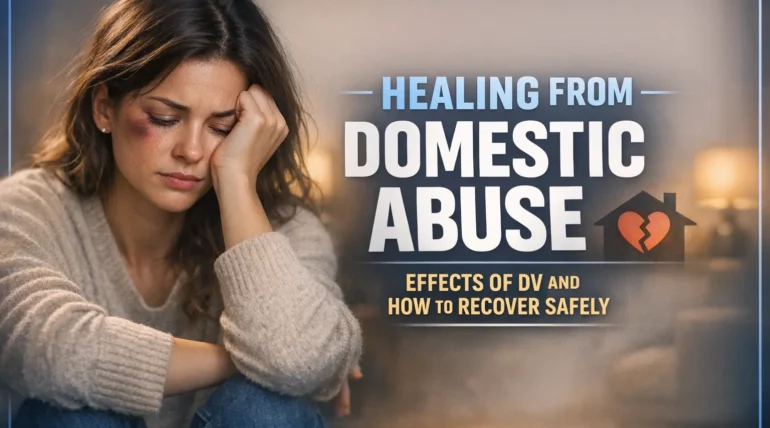
Healing from Domestic Abuse: Effects of DV and How to Recover Safely

How DV Hits Work, Money, and Social Life

Where does it hit hardest? Work becomes a victim of poor concentration and bosses see the days they hire and fire. Money tanking up on concealing injuries or making a sudden escape. Socially, you draw away, not getting support.

The Science Behind Long-Term Harm

The consequences of DV are not in your imagination; research in such locations as the CDC has revealed that survivors experience more migraines, arthritis and problems with their digestive systems years following. It is a complete physical betrayal that has to be noticed.

Healing from Domestic Abuse: Understanding Effects and Safe Recovery

The recovery process of domestic abuse begins with the truth, which is that domestic violence leaves a profound impact on you, but there is a way to heal. The consequences of DV are not scratches, but an emotional tsunami and physical scars that may be long lasting in case neglected. And here we will dissect it straight and out, using real-life examples, so that you will see it is not your fault and that you can heal.

Physical Effects of Family Violence

To begin with, understand how family violence affects your body. Violence in a relationship is usually physical, which implies repetitive injuries. I have a survivor, Sarah, who was slapped and punched throughout her life. Her ribs grew lame, which hurts her to take a deep breath to this day. All the typical consequences of DV are head injury and loss of memory or dizziness. Females are more vulnerable to reproductive injuries, such as preterm abortions, due to kicks on the stomach. Men are not spared either, as they find the broken jaws or internal bleeding that the doctors overlook at first. This stress, in the long run, makes you older, raises blood pressure and increases the odds of diabetes.

​Brain and Mental Health Impacts

Your brain takes a hit, too. Domestic violence recovery involves addressing PTSD, whereby a bang in a car causes you to flee. DV is associated with effects akin to those of war: hypervigilance makes you look around to see if you are in danger. Depression insidiously comes in and beds become the only place of security. Panic attacks resemble heart complications, and they take you to the emergency room. I have heard of survivors losing their employment due to being frozen halfway through a meeting with panic. Children who experience physical violence within a relationship become subject to attachment disorders, either too clingy or too rejective.

Emotional and Family Fallout

Abuse is something one cannot get over without feeling as though one is emerging out of a pit emotionally. Abusers dominate by terror, with tongues as sharp as swords. You’re nothing without me rings long when they are gone. Self-incrimination prospers; why not leave it so long? Shame makes you an outcast with the people who do not understand. Impacts of family violence divide families; holidays become stressful with past wrongs being re-enacted. One woman told how the threats of suicide by her abuser put her in a ten-year trap, with a feeling of guilt that is gradually being redefined through therapy.

Social, Financial, and Legal Struggles

The impact of DV makes the world smaller socially. Reliability is gone, dating becomes dangerous and friends disappear due to cancelation of the plans. Chains of financial abuse: Destroyed credit through their expenditures or the existence of hidden bank accounts. Restraining orders are helpful in a legal sense, but the stress of court reopens wounds. In the long run, unassisted, the consequences of family violence results to homelessness or addiction as the means of coping collapse.

Step 1: Prioritize Safety in Healing

Here is the hope, though: The question of how to recover after domestic violence. First come first served, always go nowhere alone. Calls to contact hotlines such as the National Domestic Violence Hotline to get the safest way out. They trace shelters, link you with the advocates. Go away with a go-bag: money, documents, drugs. Block the abuser everywhere.

Step 2: Therapy and Emotional Tools

Your healing tool for domestic abuse is therapy. Fear responses are rewired by trauma-focused CBT. EMDR cancels flashbacks with one button. Group support, as in local YWCAs, is reminding you: Other people receive it. Writing is also a way out; jot down the unseemly facts to own your story. There is one of my acquaintances who wrote letters to himself and set them on fire in a fire pit.

Step 3: Build Daily Recovery Routines

Create a domestic violence recovery routine. Light movement, brisk walks and yoga restore confidence in the body. Diet is important; DV stress kills your cells, thus pack on vegetables and proteins.

Sleep hygiene: Low lighting, no television, perhaps chamomile tea. Mindfulness applications educate people to breathe to stop panic spirals.

Step 4: Reconnect and Handle Practical Needs

Reconnect slowly. Start with safe people, a sister or an old friend.

Set boundaries: “I share when ready.” Legal aid seals protection orders. Financially, credit counseling rebuilds scores. For kids, play therapy heals the effects of DV.

Long-Term Coping Strategies

The long-term strategies are brilliant in the way to deal with domestic abuse. The most important tip, in this regard, is self-compassion, i.e., speaking to yourself as a friend does: You survived; that’s strength. Painting, hiking, whatever makes you pre-abuse you, brings you joy. Pets are unconditional and unrejudgmental. Track progress on minor victories: a nightmare-free night or saying no emphatically. Setbacks are to be expected; anniversaries cause the impact of family violence. That is all right; fall on your support net. Meds could be useful in the short term in severe cases of anxiety, but combine with therapy. Onthe spiritual front, others have peace in faith groups or meditation.

Real Success Stories

Success stories prove it. Maria went away following years of physical abuse in a relationship. The impact of DV was still felt, with night sweats and a lack of trust; however, after two years of therapy, she remarried and operates a bakery. Her mantra: I choose me now. The process of healing the wounds of domestic abuse is not linear; it is in waves, and with every crash, a stronger strength is cut out.

Holistic Professional Support

Professionals emphasize holistic recovery. Physicians check on DV effects such as stress-related thyroid problems. Inflammation is combated by nutritionists. Custody fights are directed by lawyers. Rebuilding a life brick, which you lay safe with.

Your Path to Thriving

Briefly, DV impacts force you to have respect, but finding the way to overcome domestic violence makes you powerful. The safety plans, therapy, and routines make the survivors thrive. You have it; one step is into liberty.

Practical Tips for Recovering from Domestic Violence

Ready for action? The following are simple suggestions on how to begin healing after abuse. These are based on the survival tales and professional recommendations, with emphasis on safer and daily actions.

  • Make a plan to be ready now: Pack a bag (keys, phone, cash) somewhere where it cannot be found. Memorize hotline numbers. Share a signal with somebody who is close to you to call for help, such as a porch light being on.
  • Find therapy according to DV: Find therapy specialists on Psychology Today. Online classes ensure you are not exposed in case you find it difficult to leave.
  • Record your victories: Be sure to write down one strong decision each day, such as blocking the number of an ex. It builds proof of your power.
  • Feed the body and mind: Eat simple, whole foods- have oats in the morning, salads at noon, etc. Stroll for 20 minutes to exercise endorphins against depression.
  • Rebuild money laundering: Open a sham bank account. Monitor spending with apps such as Mint, where the abuser has no access.

Strategies to Cope with Domestic Abuse Long-Term

To achieve permanent recovery, these are the ones to be tried. They address family violence directly, which fosters resilience.

  • Fiercely delimit: Go through with no scripts: I will not talk about my ex. Put some distance between the two.
  • Participate in survivor communities: Reddit has an online community of survivors on the subsubreddit r/domesticviolence. Face-to-face gatherings create physical connections.
  • Ritualize self-care: Take a walk with candles in the weekly baths or read motivational books such as Why Does He Do That? by Lundy Bancroft.
  • Check-in health care: With physicals every year, long-term consequences of DV, such as high blood pressure, are identified.
  • Congratulate milestones: To celebrate the anniversary of escape, do something to be happy, such as take a trip on her own.

Conclusion

Healing from domestic abuse means acknowledging the effects of DV, from physical pain to emotional shadows, and taking brave steps toward safety and strength. You’ve learned the long-term impacts of family violence, how to heal from domestic violence, and tips for recovering from domestic violence. Recovery builds a freer, fuller life.

To explore more resources on healing from abuse and safe recovery, visit Minds Over Matter.

FAQs

What are the main effects of DV?

Effects of DV include physical injuries, anxiety, depression, trust issues, and long-term health problems like chronic pain or PTSD.

How do I start healing from domestic abuse?

Begin with a safety plan, call a hotline, and find a therapist. Small steps like journaling build momentum.

What is physical violence in a relationship?

It’s any harmful act like hitting, choking, or throwing objects to control or hurt your partner.

How to cope with domestic abuse still in it?

Focus on safety, document incidents, save money secretly, and confide in a safe person or hotline.

Can kids recover from the effects of family violence?

Yes, with therapy, stable routines, and time. Play therapy helps them process trauma.

How long does recovery from domestic violence take?

It varies, from months to years. Progress comes in waves, but support speeds healing.

Is therapy essential for healing from abuse?

It’s highly effective for unpacking trauma and rebuilding confidence. Many find it life-changing.
Categories: Blog

Leave a Comment